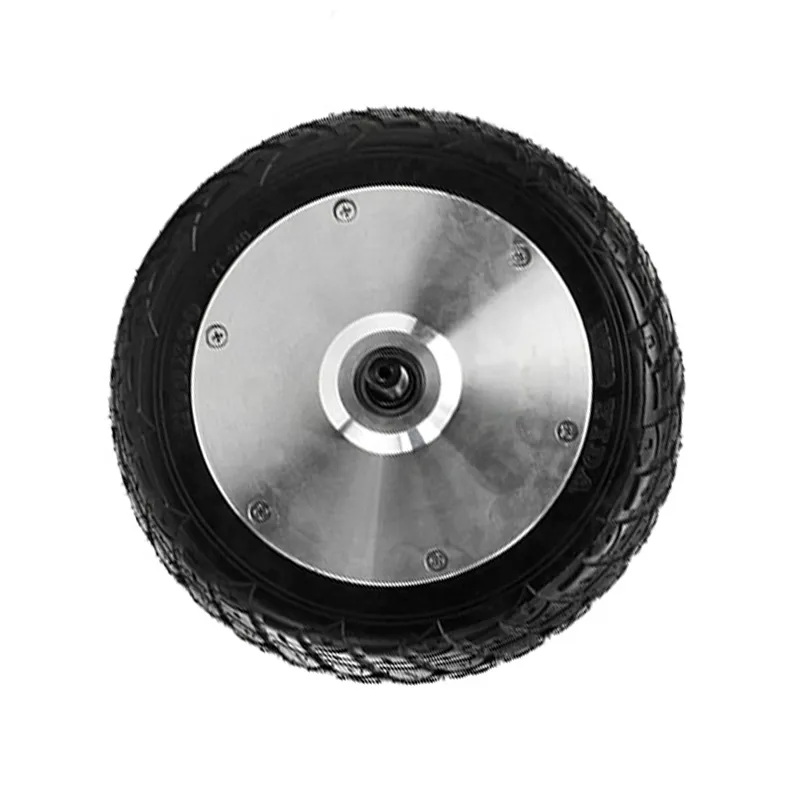
A Practical Guide to Specifying Machine Requirements for BLDC Hub Motors, Controllers, and Battery Packs
This guide from Shenzhen Jinhaixin Holdings Co., Ltd helps machine builders communicate equipment matching requirements to low-voltage e-powertrain suppliers—covering application, operating environment, load, space constraints, range targets, control method, mounting interfaces, and customization scope for BLDC hub motors, motor controllers, and battery packs.

When a machine project moves fast, the biggest delays often come from unclear requirements. For low-voltage e-powertrain selection and custom development—especially BLDC hub motors, motor controllers, and battery packs—a structured input list helps suppliers propose the right configuration and reduces iteration cycles.
This practical guide from Shenzhen Jinhaixin Holdings Co., Ltd is written for machine builders and OEM engineers who need to communicate equipment matching requirements clearly and consistently.
What you gain from a complete specification
- Faster feasibility confirmation and model selection
- Less risk of under/over-sizing motor, controller, and battery
- Clear boundaries for customization scope
- Better alignment on interfaces, harness, and mounting
1) Define the machine application and duty cycle
Start with a simple, unambiguous description of the machine and how it works. This sets the baseline for performance, thermal design, and battery sizing.
- Machine type & function: what the machine does and its primary working mode
- Operating pattern: continuous, intermittent, start/stop, frequent reversing, typical working shift
- Duty cycle: typical load profile over time (light/medium/heavy segments)
- Target lifetime expectations: required stability and maintenance considerations (non-numeric is acceptable if you cannot disclose)
A clear duty cycle description often matters as much as peak specs—because it drives thermal margins, controller selection, and battery current capability.
2) Describe the operating environment (temperature, dust/water, vibration)
Environmental inputs determine sealing, materials, connector choices, cooling strategy, and reliability validation.
Thermal
- Ambient temperature range and heat sources nearby
- Ventilation condition and enclosure constraints
Ingress & corrosion
- Dust, splash, mud, cleaning method
- Humidity, salt spray, chemical exposure
Mechanical
- Vibration / shock levels and mounting stiffness
- Road conditions or terrain profile (if mobile)
3) Provide load and performance targets (torque, speed, acceleration, gradeability)
Suppliers need measurable targets to match the motor, controller current rating, and battery discharge capability. If you cannot provide exact numbers, provide ranges and the worst-case condition.
| Input item |
What to include |
Why it matters |
| Load description |
Vehicle/machine total mass, payload range, rolling resistance, wheel size (for hub motors) |
Determines required torque, current, and thermal margins |
| Speed targets |
Max speed, typical cruising speed, low-speed precision needs |
Affects motor KV, controller tuning, and efficiency region |
| Dynamic performance |
Acceleration expectation, start torque, frequent starts/stops, reversing |
Defines peak current and heat accumulation |
| Gradeability / slope |
Maximum slope and duration on slope |
Critical for worst-case torque and continuous power |
4) Share space constraints and weight limits early
Packaging constraints directly affect feasibility. For BLDC hub motors, dimensional limits and wheel/axle interface details are especially important.
- Available envelope: max outer diameter, width, and any keep-out zones
- Weight limits: for motor, controller, and battery pack (per module if split)
- Installation orientation: airflow considerations, cable exit direction, service access
- Noise constraints: if applicable for indoor or medical-like environments
Tip: A simple 2D drawing or 3D step file with key dimensions can reduce back-and-forth dramatically—especially for mounting, axle, flange, and connector clearance.
5) Clarify range/energy targets and charging constraints (battery pack inputs)
Battery packs are not just “capacity.” Suppliers need use-time expectations and charging conditions to propose the right energy, current capability, and protection strategy.
Energy & range
- Target runtime per charge / shift
- Typical vs worst-case consumption scenario
- Acceptable battery size and modularity preference
Charging & infrastructure
- Charging time target and available power source
- On-board vs off-board charger preference
- Connector constraints and safety interlocks
Protection & integration
- BMS communication needs (if required)
- Peak current events (start, climb, impact loads)
- Serviceability: swap battery or fixed installation
6) Specify control method and communication (signals, CAN/UART, speed/torque control)
Motor controller compatibility depends heavily on how your machine “talks” to the drive system. Provide the control architecture and any existing ECU/PLC details you can share.
- Control mode: speed control, torque control, or mixed strategy
- Command signals: analog voltage, PWM, digital input, or bus control
- Communication: CAN / UART requirements, message expectations, diagnostics needs
- Feedback: speed/position sensors, hall/encoder preference if applicable
- Functional safety expectations: e-stop logic, brake input, fault handling concept
7) Confirm mounting and interface details (axle, flange, connectors, harness)
Physical interfaces are where many projects fail late. Align these details before committing to tooling or harness design.
Mechanical interfaces
- Axle type, flats/keyway, thread specs, and tolerance expectations
- Flange/bolt pattern, anti-rotation features, wheel rim interface (hub motor)
- Installation steps and service access requirements
Electrical interfaces
- Connector types or constraints (if standardized)
- Harness length, routing path, bend radius, and strain relief needs
- Power and signal separation requirements, grounding strategy constraints
8) Define the customization scope (what is fixed vs negotiable)
Custom development becomes efficient when both sides know which parameters are mandatory and which can be optimized. This helps suppliers like Shenzhen Jinhaixin Holdings Co., Ltd propose options without guessing.
- Fixed requirements: installation dimensions, interface standards, must-have control mode, mandatory environmental limits
- Optimization targets: efficiency, cost, weight, noise, thermal margin, serviceability
- Acceptable trade-offs: what can change (e.g., peak speed vs climb performance, weight vs runtime)
- Compliance expectations: any internal factory validation or market-specific requirements you must follow
A ready-to-use requirement checklist (copy & fill)
You can send the following outline to your e-powertrain supplier to accelerate evaluation and selection for BLDC hub motors, drive controllers, and energy battery packs.
A. Application
- Machine use-case & duty cycle
- Typical route/terrain or workflow steps
- Any special constraints (noise, indoor use, etc.)
B. Environment
- Temperature / humidity / corrosion risks
- Dust/water exposure and cleaning method
- Vibration/shock and mounting conditions
C. Load & targets
- Mass/payload, wheel size (hub motor)
- Speed, torque, acceleration, slope
- Worst-case continuous condition
D. Packaging
- Available space and keep-out zones
- Weight limits and layout preference
- Service access and cable exit direction
E. Battery & charging
- Runtime/range target and usage profile
- Charging time and infrastructure constraints
- Swap vs fixed battery preference
F. Control & interfaces
- Speed/torque control, signals, CAN/UART
- Sensors/feedback and diagnostic needs
- Mounting: axle/flange; connectors/harness
Working with Shenzhen Jinhaixin Holdings Co., Ltd
Shenzhen Jinhaixin Holdings Co., Ltd is a B2B manufacturer focused on low-voltage e-powertrain system design, R&D, customization, production, and sales. Our product scope includes BLDC hub motors, drive controllers, and energy battery packs. With production bases in Shenzhen, Dongguan, Changzhou, and Hainan, we support OEM projects that require stable supply and structured engineering collaboration.
How to start efficiently
- Send your filled checklist plus drawings (if available)
- Align on fixed requirements and negotiable parameters
- Confirm interfaces (mechanical + electrical) before sample build
Information that speeds evaluation
- Worst-case load condition and expected duration
- Space constraints with key dimensions
- Control/communication method (signals or CAN/UART)
If you are unsure about any parameter, share what you know and note assumptions. A transparent “known/unknown” list is often more helpful than incomplete numbers.



.png?x-oss-process=image/resize,h_800,m_lfit/format,webp)