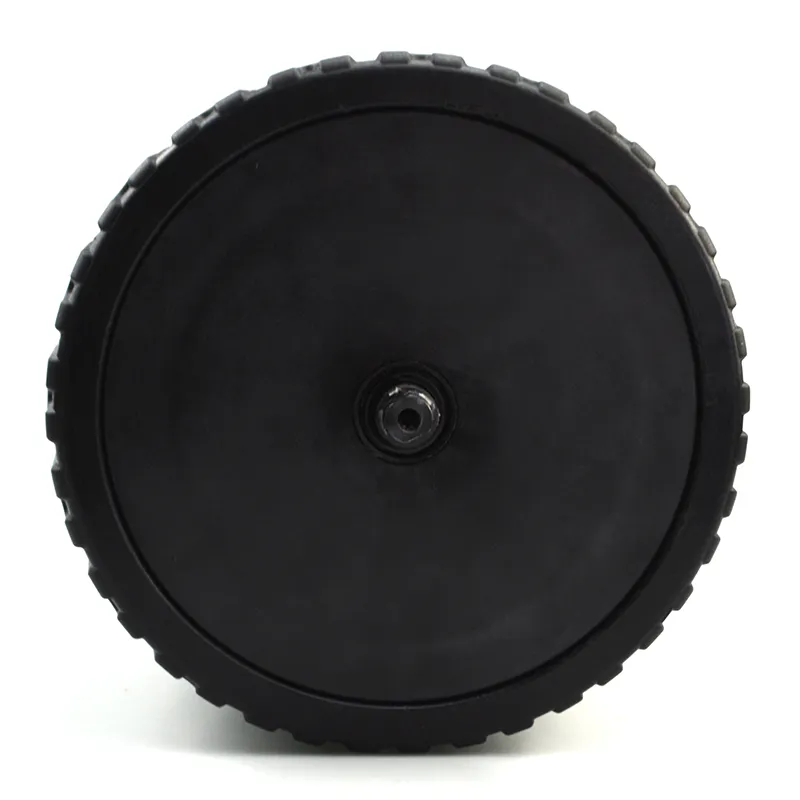
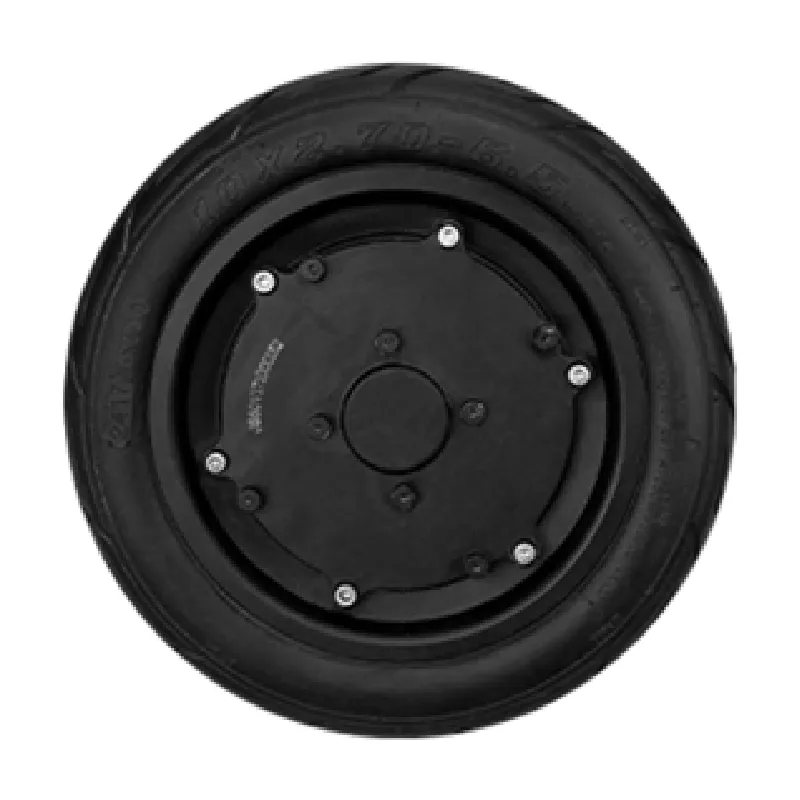
In compact electric go-karts, “power” is rarely the bottleneck—power transfer efficiency is. The difference between a kart that feels crisp and controllable and one that feels noisy, vibrating, and inconsistent often comes down to mechanical precision: rotor support, axial runout, assembly repeatability, and thermal stability.
This article explains, from a neutral engineering perspective, how an 8-inch outrunner hub motor with a single-side press-fit shaft structure can reduce vibration paths, improve torque utilization at low speed, and simplify installation quality control—while highlighting what engineers and sourcing teams should verify before specifying for production.
Small go-karts spend most operating time in low-to-mid RPM where launch torque, controllability, and thermal stability define user experience. Outrunner hub motors tend to fit this use-case because their rotor radius is larger, increasing the effective lever arm for torque generation. In practical terms, a comparable motor mass can deliver higher torque density at low speed than many inrunner architectures.
With the magnets on the outer rotor, the air-gap circumference increases. That allows designers to distribute magnetic flux over a larger arc length, which typically improves torque smoothness and reduces local saturation risk—especially valuable when the controller applies high phase current during starts.
In low-speed applications, torque is strongly linked to the motor’s electromagnetic constant (Kt) and the usable current limited by heat. For small hub motors, improving thermal paths and reducing mechanical losses can translate to a 3–8% real-world efficiency gain at the wheel under stop-and-go duty—often more noticeable than a similar percentage gain in peak electrical power.
In go-karts, torque ripple becomes “feel.” A well-chosen slot/pole combination and consistent winding distribution help reduce cogging and current ripple, which lowers acoustic noise and improves traction control. For buyers comparing motors with similar headline specs, asking about cogging torque, back-EMF waveform, and stator lamination grade is often more predictive of on-track smoothness than peak wattage.
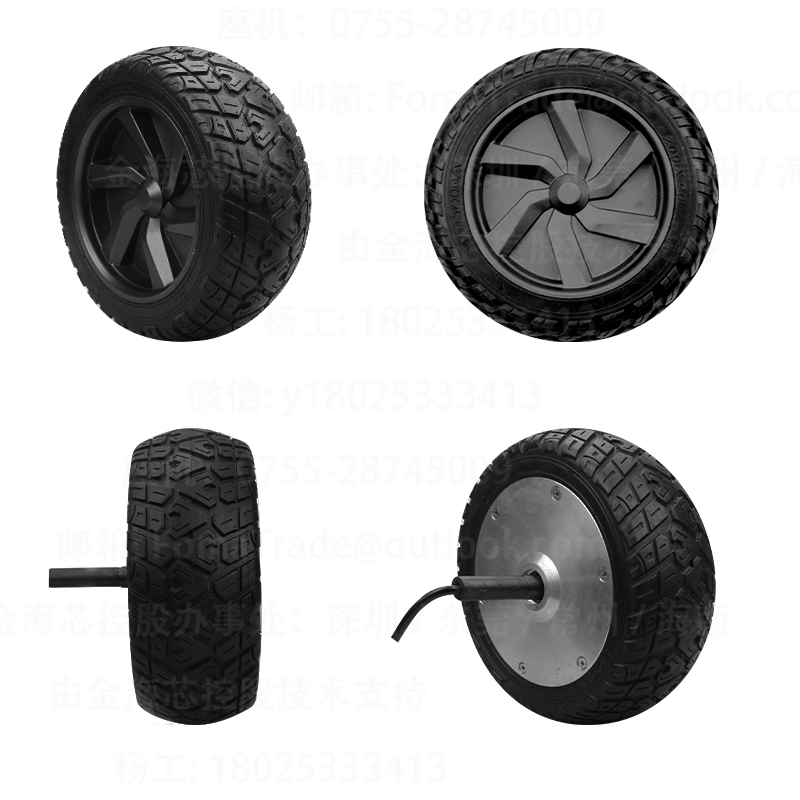
Traditional hub motor support schemes often rely on dual-side structures (two-sided bearing supports or more complex housings). In compact karts, packaging is tight and assembly consistency is a challenge—especially when multiple suppliers are involved (wheel hub, axle, brackets, spacers). A single-side press-fit shaft can offer practical advantages when properly engineered.
Axial runout and micro-misalignment can amplify vibration, creating extra bearing load and uneven air-gap effects. A press-fit shaft structure—when controlled by correct interference, surface finish, and concentricity—helps lock the rotor/stator relationship into a more repeatable stack-up. That repeatability is often what sourcing teams need for stable production quality.
In small karts, vibrations are not “small”—they propagate through the frame and driver seat quickly. By minimizing looseness points and improving coaxial alignment, a well-executed single-side press-fit architecture can reduce resonance sensitivity. In field deployments, teams commonly report a noticeable reduction in high-frequency buzzing and a more “solid” acceleration feel when runout is controlled below typical acceptance thresholds (for example, ≤ 0.05–0.10 mm total indicated runout at the wheel interface, depending on design and bearing class).
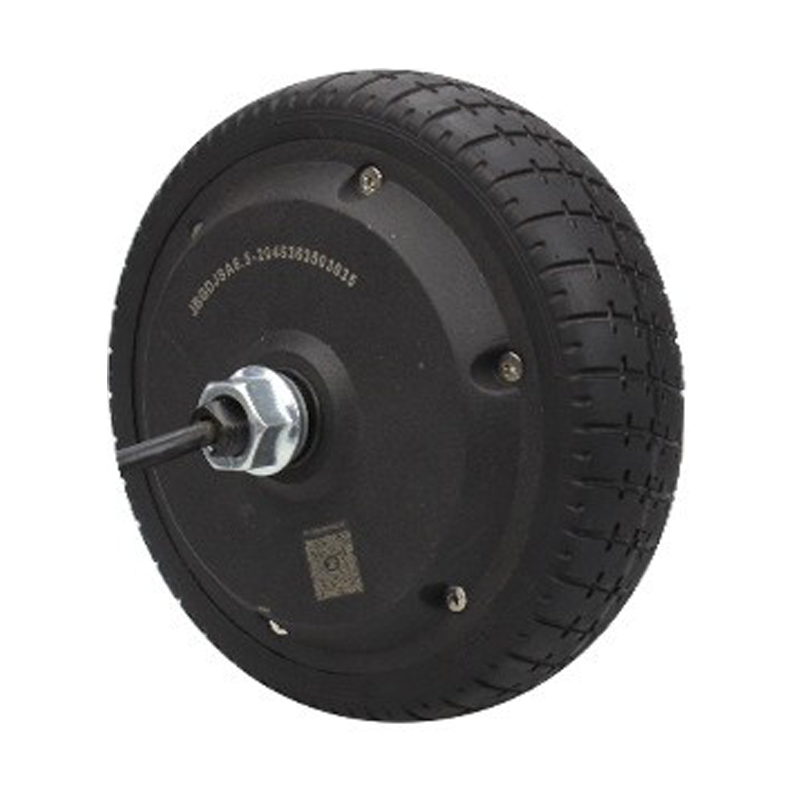
In go-kart duty cycles, heat is the silent limiter. When a motor runs hotter, copper resistance rises, magnet performance can degrade at elevated temperature, and the controller may reduce current. That chain directly lowers wheel torque. Therefore, “efficiency” is often the combined result of electromagnetic efficiency + mechanical loss + thermal headroom.
Lower vibration and more stable alignment can reduce parasitic friction, micro-wear, and bearing heating. While the absolute thermal gain depends on design, integrators often observe that improving assembly precision helps keep operating temperatures more stable in repeated starts. For reference, even a 5–10°C reduction in winding temperature under the same track conditions can preserve torque output consistency over a session and extend insulation life.
Single-side press-fit designs reward good assembly discipline. Most “motor problems” reported by end users in small EV builds trace back to mounting flatness, fastener preload inconsistency, or coaxial misalignment between the hub motor and wheel interface.
Uneven tightening can introduce local distortion, which turns into runout and noise at speed. Teams usually adopt a cross-pattern tightening sequence, calibrated torque tools, and (when appropriate) thread-locking strategies compatible with operating temperature. In production, documenting the torque window and sequence often reduces variance more than changing motor models.
A practical method is to fixture the assembly and measure runout at the wheel mounting surface with a dial indicator, then correct by cleaning mating surfaces, re-seating, or using controlled shimming if the design allows. If repeated builds show drift, the issue is often upstream: bracket machining tolerance, hub face flatness, or inconsistent bearing seating depth.
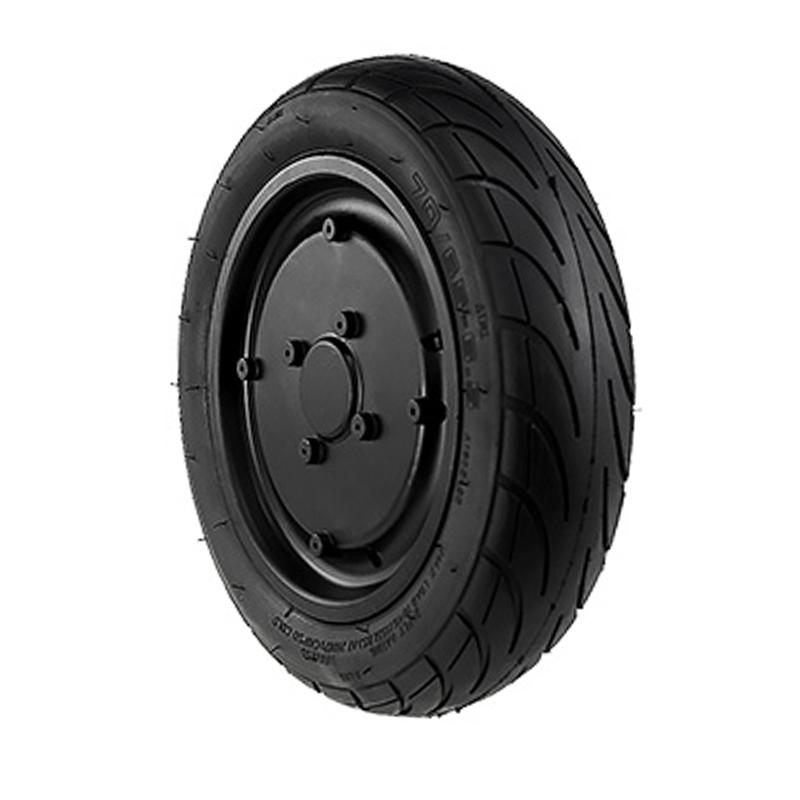
Go-karts see curb strikes, lateral loads, and repeated thermal cycles. If the wheel or tire assembly is poorly balanced, it can mask as a motor issue. A balanced wheel/tire, verified bearing seating, and a consistent axial clamp stack (spacers, washers, hub face) typically reduce warranty complaints. For sourcing decisions, it’s useful to ask for the supplier’s recommended maximum wheel imbalance and any validated endurance test conditions.
In pilot builds where mechanical runout and mounting repeatability were tightened (often alongside a switch to a more stable hub structure), teams commonly see improvements that matter to both engineering and procurement:
Reduced vibration transmission and better coaxial alignment can make torque delivery feel smoother, especially during low-speed throttle modulation.
When bearing heating and micro-friction are reduced, the system can maintain target torque with slightly less current, which supports controller headroom.
Many after-sales cases are installation tolerance issues. Designs that are more assembly-tolerant—and suppliers who provide clear QC metrics—reduce ambiguity and rework cost.
For engineering teams, the single-side press-fit shaft concept is valuable because it can improve alignment repeatability and reduce vibration sensitivity—two root causes of efficiency loss in low-speed, high-load use. For procurement, it offers a clearer checklist: press-fit spec control, runout acceptance, inspection method, and endurance validation.
The best results come when the motor supplier shares measurable QC targets and installation guidance, and when integrators treat mounting flatness, bolt preload, and wheel balance as part of the drivetrain specification rather than last-minute assembly details.
WWTrade supports teams that need stable low-speed torque, repeatable assembly tolerances, and documentation that procurement can actually use—drawings, QC checkpoints, and integration guidance aligned with real production workflows.
Explore WWTrade 8-inch outrunner hub motors with single-side press-fit shaft structureTypical evaluation support: runout targets, bearing selection guidance, mounting recommendations, and sample validation for small go-kart drivetrains.