Low-Voltage Three-Electric System Explained: How Hub Motors, Controllers, and Battery Packs Work Together
Learn what a low-voltage three-electric system is and how a BLDC hub motor, drive controller, and energy battery pack work together to affect vehicle and equipment performance—an overview from Shenzhen Jinhaixin Holdings Co., Ltd.

Understanding a Low-Voltage “Three-Electric System”
In low-voltage electric mobility and small equipment platforms, the three-electric system typically refers to the coordinated set of motor, drive controller, and energy battery pack. How well these three parts are matched and tuned directly influences efficiency, responsiveness, stability, and thermal behavior.
At Shenzhen Jinhaixin Holdings Co., Ltd (深圳金海芯控股有限公司), we design and manufacture low-voltage powertrain components—including BLDC hub motors, controllers, and battery packs—under a quality-managed, engineering-led model that supports B2B customization.
Who this page is for
- OEMs building low-voltage electric platforms
- Engineering teams selecting motor–controller–battery combinations
- Product managers evaluating performance/packaging trade-offs
- Buyers sourcing stable, production-ready powertrain components
Key idea: The battery pack supplies energy, the controller regulates and executes control logic, and the hub motor outputs torque—system synergy matters.
Component Roles: Clear Separation, Tight Coupling
| Component |
Primary job |
What it impacts most |
Common engineering focus |
| Energy battery pack |
Provides DC energy and current capability to the system |
Runtime, voltage stability, peak power availability |
Pack sizing, connectors, protection strategy, thermal constraints |
| Drive controller |
Converts DC to controlled phase power and executes control logic |
Throttle feel, response, efficiency window, protective limits |
Matching to motor, tuning parameters, wiring, heat dissipation |
| BLDC hub motor |
Outputs torque directly at the wheel (hub-integrated drive) |
Acceleration, climbing ability, stability, mechanical packaging |
Mounting structure, load path, wheel/tire fit, thermal margin |
How the System Works Together (Practical View)
- Battery pack supplies DC power to the controller with a voltage/current capability that must match the application’s load profile.
- Controller regulates and converts power (including protective logic) and provides phase output to the motor according to command input.
- Hub motor converts electrical power to wheel torque, delivering propulsion with fewer drivetrain parts and compact integration.
- Feedback + protection loops stabilize operation across load changes, temperature rise, and transient events—good matching reduces unnecessary stress.
Engineering note: In low-voltage platforms, wiring, connectors, and thermal design can strongly influence real-world performance. Even with a capable motor, poor controller tuning or battery sag can reduce responsiveness and stability.
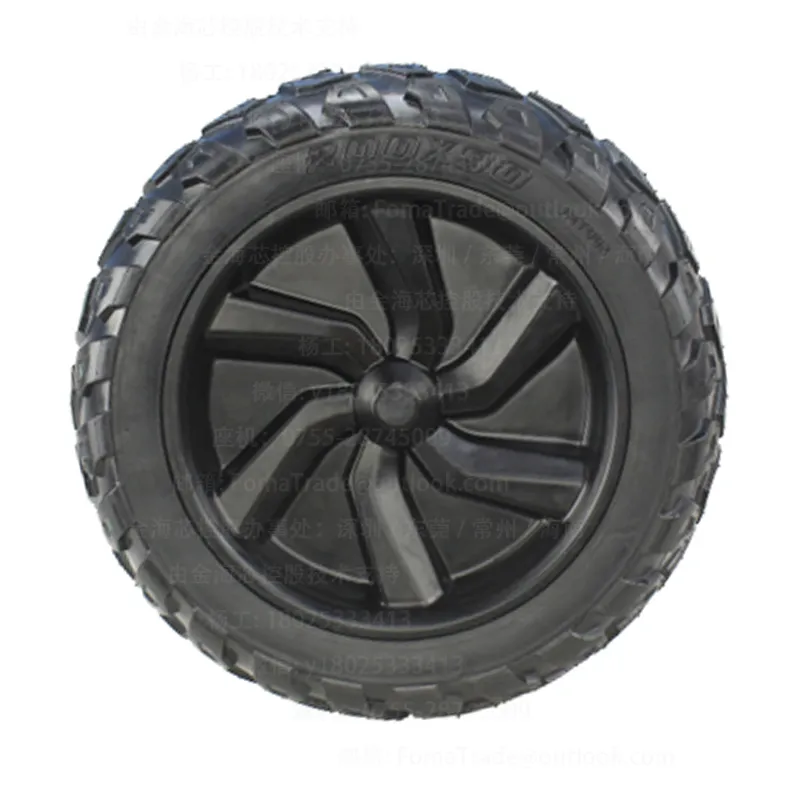
Featured Example: WINAMICS 8-inch Unilateral Axle-Press Hub Motor
Product series: Electric kart motor (low-voltage three-electric system component)
Why this hub motor fits small mobility & leisure equipment
The WINAMICS unilateral axle-press hub motor (conventional model) is designed for applications such as small karts and leisure equipment, where stable installation, efficient torque transfer, and practical assembly are key.
Ø200 mm diameter
84 mm tire width fit
Unilateral axle-press structure
Easy installation
- Unilateral axle-press design helps reinforce stability and supports efficient power transmission in compact assemblies.
- Dedicated size fit (Ø200 mm × 84 mm) supports direct adaptation without secondary machining for the intended wheel/tire specification.
- Convenient assembly can reduce installation effort and help shorten build time during production or integration.
- Material and quality control aligned with Shenzhen Jinhaixin’s quality management approach for stable, reliable supply.
- After-sales support is available to help OEM teams keep integration and maintenance on track.
System Matching Checklist (Motor–Controller–Battery)
Battery pack → controller
- Operating voltage range compatibility
- Peak and continuous current capability for load transients
- Connector/wiring suitability and voltage drop control
Controller → hub motor
- Motor type compatibility (BLDC hub motor) and control mode
- Parameter tuning for smooth start/stop and stable operation
- Thermal design and protective thresholds
Hub motor → mechanical system
- Wheel/tire packaging and mounting constraints
- Load path and stability under expected operating conditions
- Installation workflow and service accessibility
About Shenzhen Jinhaixin (WINAMICS) Capability Context
Shenzhen Jinhaixin Holdings Co., Ltd is an integrated industry-and-trade enterprise focused on low-voltage three-electric system design, R&D, customization, manufacturing, and sales. With headquarters in Shenzhen and production bases in Shenzhen, Dongguan, Changzhou, and Hainan, we support B2B customers with consistent manufacturing and responsive engineering collaboration.
What we supply
- BLDC hub motors
- Drive controllers
- Energy battery packs
How we work
- Customer-centric engineering alignment
- Quality management for stable supply
- Customization for different industry needs
What to expect
- Clear component boundaries and integration guidance
- Practical product fit for compact platforms
- After-sales support aligned to OEM needs
Discuss Your Low-Voltage Powertrain Selection
If you are evaluating a low-voltage three-electric system for a kart or small equipment platform, you can reference the WINAMICS 8-inch unilateral axle-press hub motor (Ø200 mm, tire width 84 mm) as a practical motor-side example and align the controller and battery pack around the target load and packaging constraints.
For faster alignment, prepare: application type (kart/leisure equipment), wheel/tire specification, expected load profile, and integration constraints. Shenzhen Jinhaixin (WINAMICS) can support component selection and customization within the low-voltage three-electric system scope.