How Brushless Hub Motors, Drive Controllers, and Battery Packs Coordinate in a Low-Voltage Electric Powertrain
This guide from Shenzhen Jinhaixin Holdings Co., Ltd explains how a low-voltage electric powertrain works, clarifying the roles and matching logic of brushless hub motors, drive controllers, and energy battery packs to support B2B selection, customization, and solution discussions.
In a low-voltage electric powertrain (often referred to as a “three-electric system”), performance and reliability depend on how well three core components work together:
brushless hub motors, drive controllers, and energy battery packs.
This B2B-oriented guide by Shenzhen Jinhaixin Holdings Co., Ltd explains the coordination logic—from energy supply to control strategy to torque output—so OEMs and integrators can communicate requirements clearly, evaluate selection options, and plan customization efficiently.
Quick system view
- Battery pack: provides stable DC energy and current capability
- Drive controller: converts DC to controlled 3-phase output and executes protection/control logic
- Brushless hub motor: converts electrical power into wheel torque and speed
1) Component roles and boundaries in a low-voltage powertrain
| Component |
Primary responsibility |
Typical B2B selection inputs |
Key integration notes |
| Brushless hub motor |
Delivers torque/speed at the wheel; defines mechanical interface and installation structure. |
Wheel size, load, target speed range, duty cycle, mounting constraints, environment. |
Match motor electrical parameters with controller capabilities; ensure mechanical fit and cable routing. |
| Drive controller |
Controls current/torque, speed behavior, start/stop smoothness; executes protections. |
Voltage range, current capability, sensor/feedback method, throttle/command interface, protection needs. |
Align connector/communication and tuning approach with motor and vehicle behavior expectations. |
| Energy battery pack |
Provides energy and peak current; impacts range, sag under load, and system stability. |
Required runtime, peak/continuous current demand, charging method, packaging constraints, safety requirements. |
Battery capability must support controller demand; consider wiring, connectors, and protection coordination. |
Practical rule: for stable operation, the battery pack must comfortably supply the controller’s demand, and the controller must be configured to protect both the motor and the battery under real duty cycles (starts, slopes, repeated acceleration, heat buildup).
2) How the three components coordinate (energy → control → torque)
Step A — Battery provides “usable” power
The battery pack supplies DC voltage and current. Under acceleration or load changes, voltage sag and current limits influence how much power the controller can deliver. A properly matched pack supports both continuous running and peak events without instability.
Step B — Controller “translates” requests into motor phase current
The drive controller regulates current and commutation, effectively deciding torque behavior, smoothness, and protection thresholds. This is where tuning and interfaces (e.g., throttle/command input) shape the driving feel and safety margins.
Step C — Hub motor converts electrical power into motion
The brushless hub motor outputs wheel torque and speed based on supplied phase current and its own electromagnetic and mechanical design. Mechanical fit, installation structure, and heat dissipation considerations directly affect real-world reliability.
System matching logic: define the application’s load and duty cycle first → select a hub motor that fits the wheel/mechanical constraints → choose a controller that can properly drive and protect that motor → confirm the battery pack can supply the controller’s required current across the full operating profile.
3) Product context: WINAMICS 8-inch unilateral shaft press-fit conventional hub motor
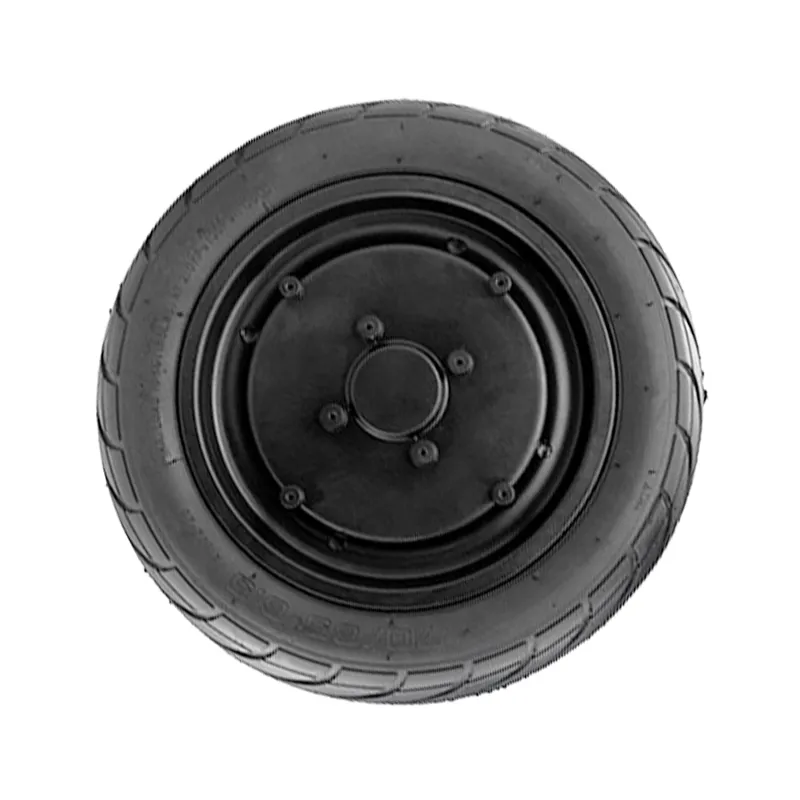
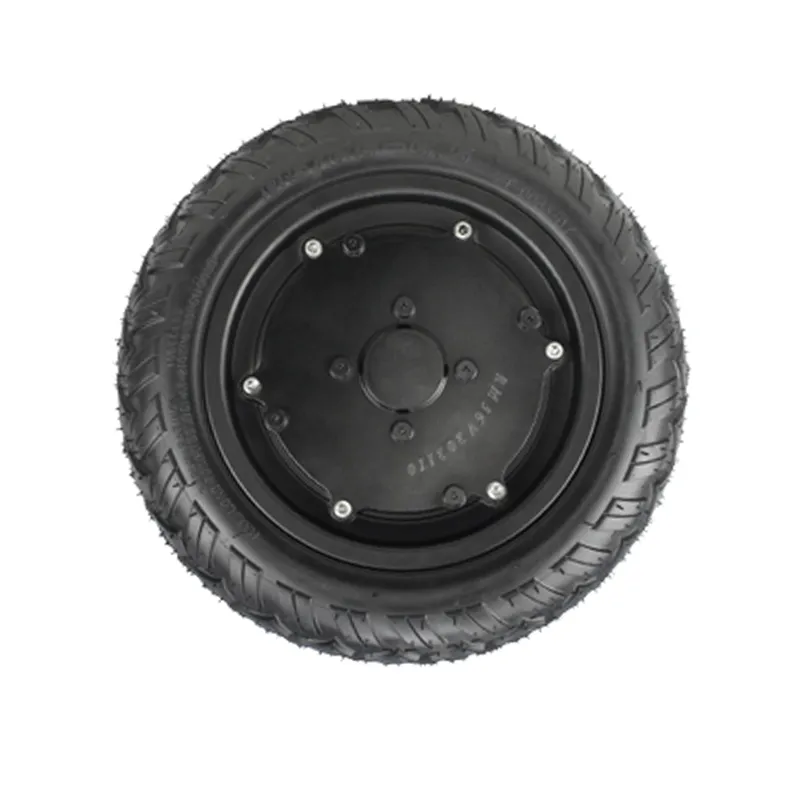
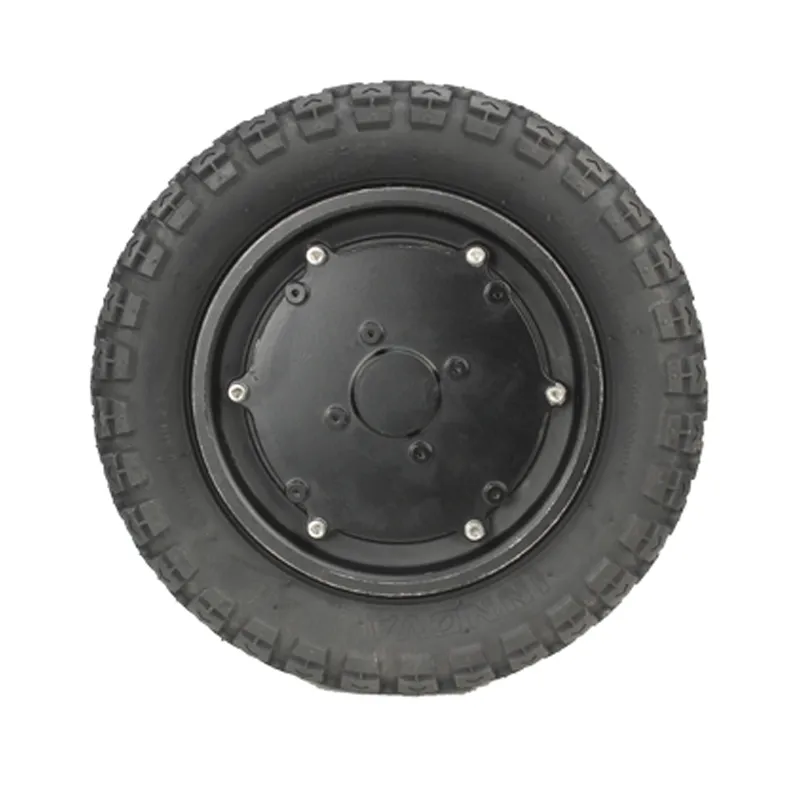
As part of Shenzhen Jinhaixin Holdings Co., Ltd’s low-voltage three-electric product offering, the WINAMICS hub motor shown here is a conventional 8-inch unilateral shaft press-fit hub motor, positioned for small electric karts and recreational devices where stable structure and straightforward installation are valued.
Key physical fit
- Diameter: 200 mm
- Tire width: 84 mm
- Structure: unilateral shaft press-fit design (focused on stability and efficient power transmission)
Why this structure matters in a system discussion
- A stable mechanical interface helps reduce integration rework and improves overall assembly consistency.
- A “no secondary machining” approach can streamline OEM production scheduling and save installation time.
- Material and process control are managed under an established quality management approach, supporting consistent supply for B2B projects.
Typical positioning keywords:
unilateral-shaft 8-inch conventional hub motor, hub motor for small equipment fitment, high-stability hub motor.
4) What to confirm when matching motor + controller + battery pack
Application & duty cycle
- Load profile (rider/cargo + terrain)
- Acceleration frequency and start-stop intensity
- Continuous runtime expectations
- Ambient temperature and ventilation constraints
Electrical matching
- Motor–controller compatibility (commutation method, feedback)
- Controller current capability aligned with battery delivery capability
- Protection coordination (over-current / under-voltage behavior)
- Wiring and connector planning to reduce losses and installation risk
Mechanical integration
- Wheel size and installation geometry
- Shaft/press-fit structure and mounting rigidity
- Cable routing and strain relief
- Serviceability and replacement workflow
For OEM communication: When you share your target vehicle speed, load, wheel size, installation constraints, and expected duty cycle, Shenzhen Jinhaixin Holdings Co., Ltd can align hub motor selection and discuss suitable controller and battery pack pairing within a low-voltage electric powertrain framework—supporting practical customization without unnecessary complexity.
5) Engineering support and customization scope
Shenzhen Jinhaixin Holdings Co., Ltd is an integrated manufacturer focused on low-voltage electric powertrain design, R&D, customization, manufacturing, and sales. With production bases in Shenzhen, Dongguan, Changzhou, and Hainan, we support B2B projects requiring stable supply and clear technical collaboration.
What we provide
- Brushless hub motors (including hub motor options for electric kart applications)
- Drive controllers to match motor behavior and protection needs
- Energy battery packs as part of overall three-electric system discussions
- After-sales support aligned to B2B deployment and maintenance needs
How to start a specification conversation
- Tell us the application (e.g., small kart / recreational device) and wheel size constraints
- Describe load, usage duration, and typical operating conditions
- Share preferred installation method (press-fit/shaft structure, space limits)
- Confirm whether you need a component supply or a coordinated low-voltage system approach
Brand reference product on this page: WINAMICS 8-inch (200 mm) unilateral shaft press-fit conventional hub motor with 84 mm tire width—designed for stable integration and efficient installation in small equipment scenarios.


.png?x-oss-process=image/resize,h_800,m_lfit/format,webp)