How to Configure a Low-Voltage E-Powertrain: Brushless Hub Motor, Controller, and Battery Pack Matching
This guide from Shenzhen Jinhaixin Holdings Co., Ltd explains how to select and match a low-voltage e-powertrain—brushless hub motor, drive controller, and energy battery pack—covering key sizing logic, compatibility considerations, and typical application scenarios for B2B procurement and engineering teams.
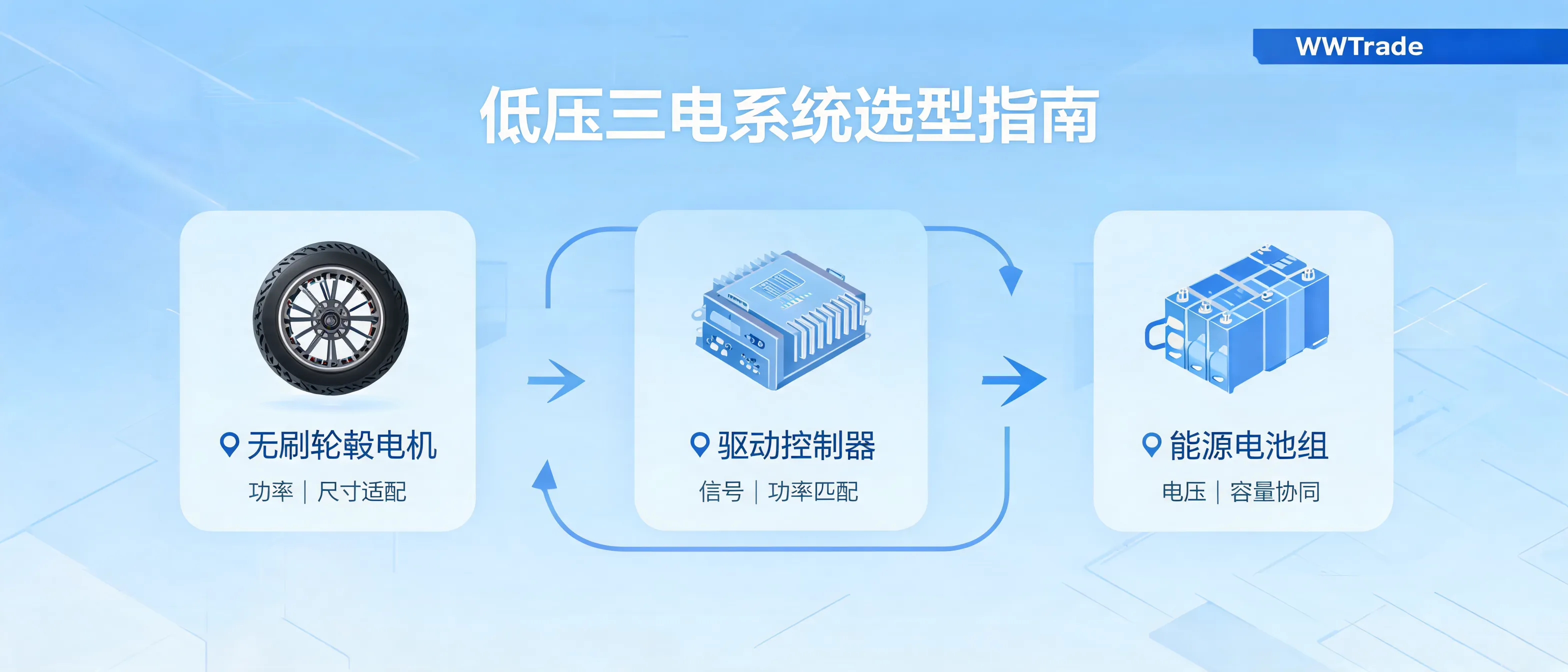
Matching a low-voltage e-powertrain is not only about choosing parts—it is about making sure the brushless hub motor, drive controller, and energy battery pack work together as one system under your real load, duty cycle, and environment. This page provides a practical framework for B2B procurement and engineering teams to shortlist configurations, validate compatibility, and prepare for customization.
Brand & Manufacturer: Shenzhen Jinhaixin Holdings Co., Ltd (WINAMICS) — integrated design, R&D, customization, production, and sales for low-voltage e-powertrain components.
What you’ll get: selection logic, key compatibility checks, and typical application scenarios to coordinate motor–controller–battery pack for project rollout.
1) Start with the Application: Define the Operating Envelope
Before selecting a motor or controller, lock down the constraints that drive electrical sizing. For low-voltage systems, the most common mismatches come from missing load spikes, thermal limits, or installation constraints.
- Vehicle / device type: karting, leisure equipment, small mobility platforms, or custom small machines.
- Target performance: expected speed range, acceleration feel, gradeability, payload.
- Duty cycle: continuous cruising vs. frequent start/stop, peak bursts, and recovery time.
- Environment & cooling: ambient temperature, airflow, dust/water exposure, enclosure constraints.
- Mechanical packaging: wheel size, tire width, axle structure, and mounting approach.
Engineering tip: treat peak current and thermal capacity as primary sizing drivers—especially for small devices with limited cooling or frequent acceleration/braking.
2) Select the Brushless Hub Motor: Fit, Stability, and Real-World Load
A brushless hub motor is both a propulsion component and a mechanical interface. Prioritize fitment, stability, and the torque/speed window needed by your device.
Example Component (WINAMICS)
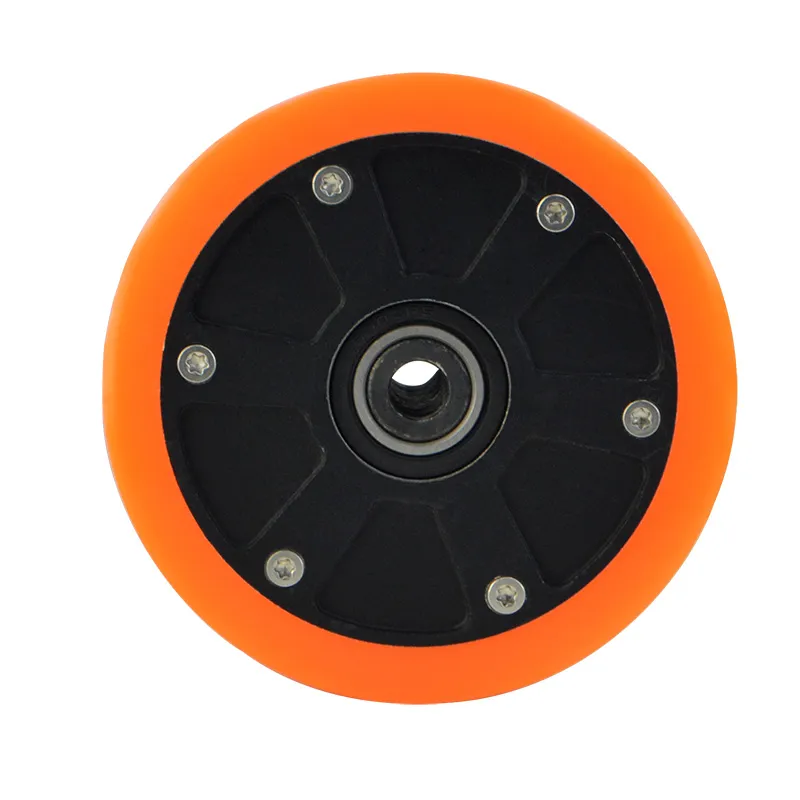
8-inch conventional hub motor with unilateral press-fit axle design for small devices
- Diameter: 200 mm (8 inch)
- Tire width: 84 mm
- Structure: unilateral press-fit axle (single-side axle press design)
- Positioning: designed for small karts, leisure equipment, and similar compact applications
Key advantage focus: the unilateral press-fit axle structure strengthens stability and supports efficient power transmission, while the 200 mm × 84 mm form factor helps reduce secondary mechanical processing for compatible builds.
Motor selection checklist (B2B-ready)
- Mechanical interface: wheel diameter, tire width, axle type, and mounting clearance.
- Stability needs: structural support and vibration tolerance in your frame design.
- Expected load profile: payload, slopes, and start/stop frequency.
- Integration constraints: cabling, connector routing, and serviceability.
- Quality & consistency: material selection and adherence to a defined quality management process.
3) Size the Drive Controller: Current Headroom and Protection Strategy
The drive controller determines how the motor is energized and protected. A good match is not only “can it spin,” but whether it can handle peak current, deliver stable control, and protect the system under fault conditions.
| Controller consideration |
Why it matters for matching |
| Voltage class compatibility |
Must align with your battery pack’s nominal voltage range to avoid undervoltage/overvoltage behavior. |
| Continuous vs. peak current |
Peak current supports acceleration and grade events; continuous current supports sustained load without overheating. |
| Control method & signals |
Throttle/brake inputs, communication needs, and integration with your system harness and safety logic. |
| Protections |
Overcurrent, undervoltage, thermal protection, and fault handling reduce downtime and increase field reliability. |
Practical rule: leave reasonable controller headroom for transient load spikes rather than sizing only to nominal operation—this improves drivability and reduces nuisance faults in demanding duty cycles.
4) Configure the Energy Battery Pack: Voltage Range, Current Delivery, and Runtime
The energy battery pack sets the system voltage window and the current that can be delivered safely. Matching should consider both electrical compatibility and operational goals such as runtime and recharge strategy.
- Voltage alignment: the pack’s working voltage range must be compatible with the controller and motor design targets.
- Current capability: ensure the pack can supply acceleration peaks without excessive sag that triggers protection.
- Capacity planning: size for your expected runtime and duty cycle, not just maximum speed use cases.
- BMS and safety: protection strategy should align with controller protections for clean fault coordination.
- Mechanical packaging: dimensions, mounting points, and service access impact maintainability.
5) Compatibility Checks: Motor–Controller–Battery as One System
Use the following checks to reduce integration risk during procurement and engineering validation. These items are commonly reviewed during WINAMICS low-voltage e-powertrain configuration discussions.
Electrical matching
- Voltage window: battery working range ↔ controller rated range ↔ motor design intent.
- Current path: battery output capability ↔ controller continuous/peak ↔ motor thermal limits.
- Protections coordination: BMS thresholds and controller fault logic should not “fight” each other.
Mechanical & integration matching
- Mounting & fitment: wheel diameter and tire width, axle structure (e.g., unilateral press-fit axle), and clearance.
- Installation efficiency: avoid designs that require unnecessary secondary machining where possible.
- Harness & connectors: ensure routing and service access are feasible for production and after-sales support.
Validation planning
- Bench verification: confirm basic electrical compatibility and stable control behavior.
- Load testing: validate acceleration peaks and thermal performance under your duty cycle.
- Field maintainability: check ease of installation, replacement, and troubleshooting process.
Typical Application Scenarios for Low-Voltage E-Powertrains
Shenzhen Jinhaixin Holdings Co., Ltd develops low-voltage e-powertrain components for multiple industrial and commercial scenarios. Typical use cases include:
- Small karts and electric karting platforms
- Leisure and recreational electric devices
- Compact equipment requiring stable hub-motor-based drive
Engineering & Procurement Support (Customization-Ready)
As an integrated design-to-manufacturing company, Shenzhen Jinhaixin Holdings Co., Ltd provides brushless hub motors, drive controllers, and energy battery packs—plus professional customization for B2B projects. Our production footprint includes Shenzhen, Dongguan, Changzhou, and Hainan, supported by a quality management approach focused on stable, reliable delivery.
To speed up your matching review, prepare:
- Application type and wheel/tire constraints (e.g., 8-inch, 84 mm tire width if applicable)
- Target speed/torque expectations and typical payload
- Duty cycle description (continuous, intermittent, peak events)
- Available installation space and cooling conditions
- Preferred controller interfaces and system safety requirements
Product note (WINAMICS hub motor example)
The 8-inch (200 mm) / 84 mm tire width unilateral press-fit axle conventional hub motor is designed to improve stability, streamline installation, and support smooth operation in compact applications—while maintaining reliable build quality and after-sales support.
If you are planning a low-voltage e-powertrain program, WINAMICS can support selection alignment from motor fitment through controller sizing and battery pack configuration—so your team can move from shortlist to integration with clearer technical assumptions.