A Standard Workflow for Custom Low-Voltage E-Powertrain (Three-Electric) Systems
Shenzhen Jinhaixin Holdings Co., Ltd summarizes a practical, standard workflow for low-voltage e-powertrain (three-electric) system customization—covering requirement confirmation, parameter definition, solution matching, prototype validation, and mass-production delivery—to help procurement and R&D teams evaluate and execute projects efficiently.
Shenzhen Jinhaixin Holdings Co., Ltd focuses on the design, R&D, customization, manufacturing, and sales of low-voltage e-powertrain (three-electric) systems. For procurement and R&D teams, a clear workflow is essential to align expectations, control iteration risk, and move efficiently from idea to delivery—especially for projects involving hub motors, drive controllers, and battery packs.
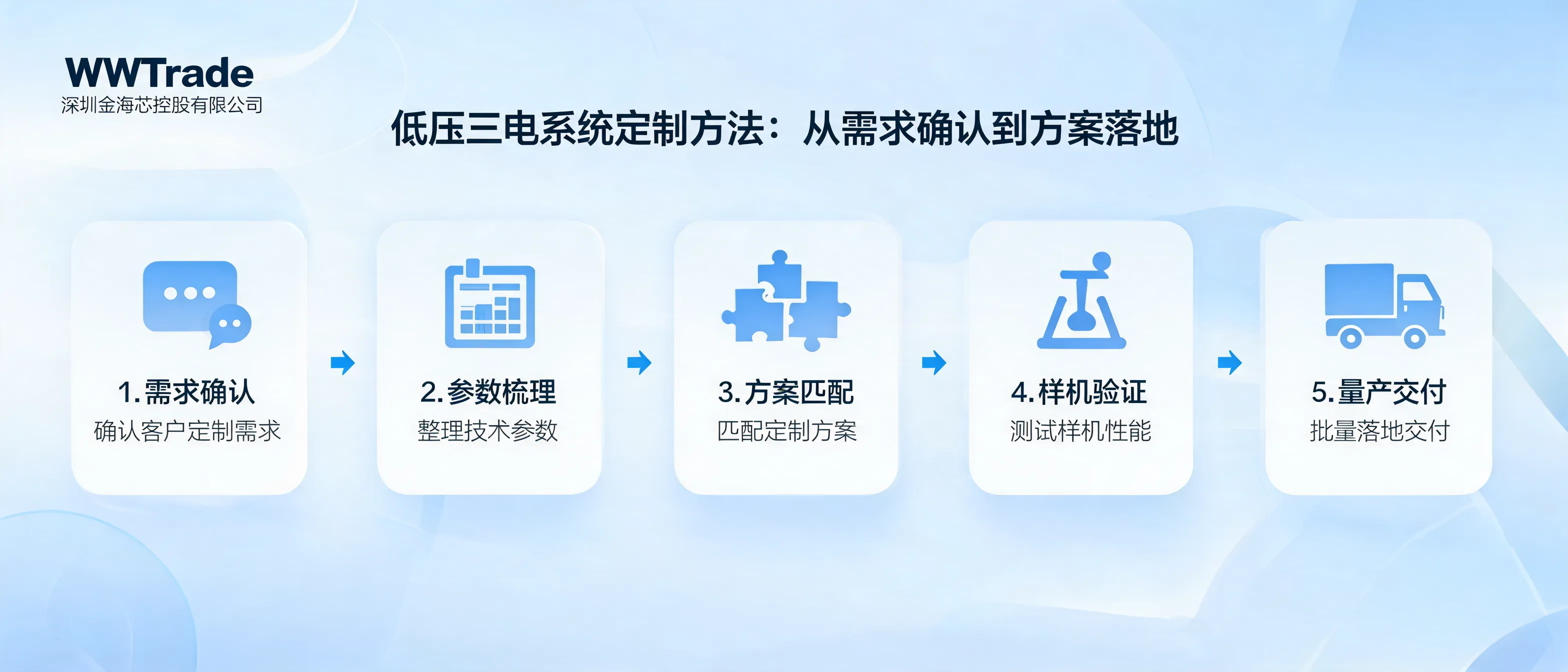
This page outlines a practical, standardized path used for customization projects: requirement confirmation → parameter consolidation → solution matching → prototype build & validation → mass-production handover, with the key checkpoints and deliverables that support decision-making and execution.
Who This Workflow Is For
Procurement & Sourcing
- Clarify scope, acceptance criteria, and delivery boundaries
- Compare solution options based on defined parameters
- Reduce rework caused by ambiguous requirements
R&D & Engineering
- Lock key electrical/mechanical interfaces early
- Plan prototype validation milestones and samples
- Support motor–controller–battery integration readiness
Project & Operations
- Define responsibilities, handover points, and timelines
- Create a stable path from prototype to mass production
- Standardize communication across multi-site delivery
The Standard Customization Workflow (End-to-End)
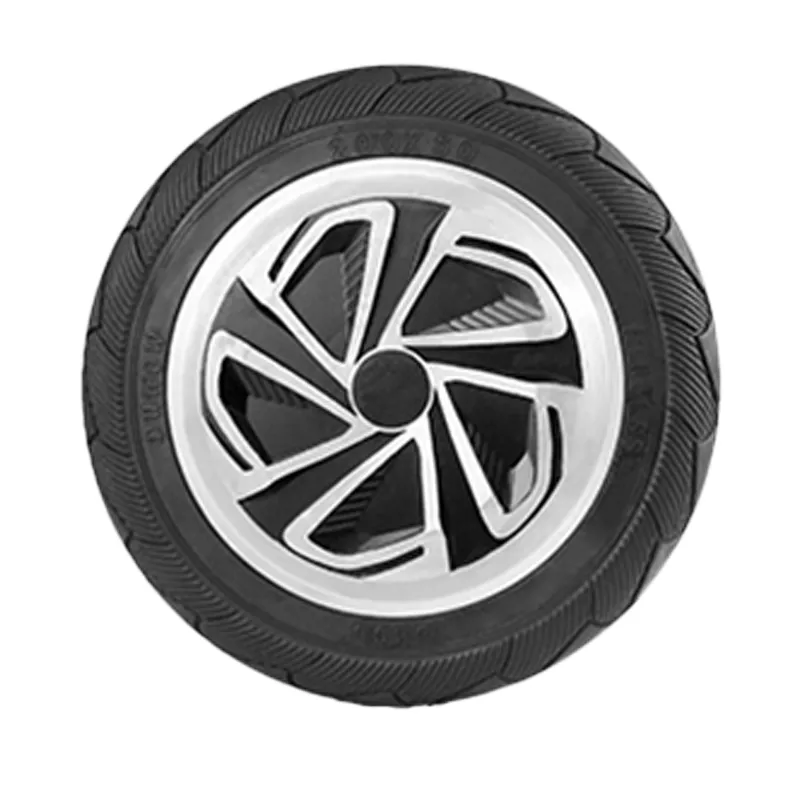
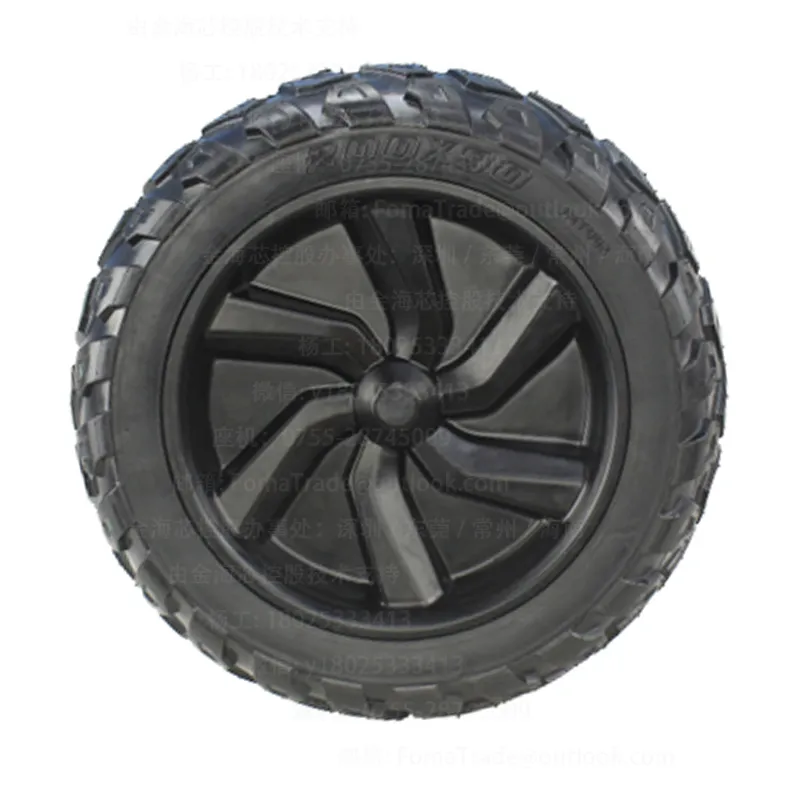
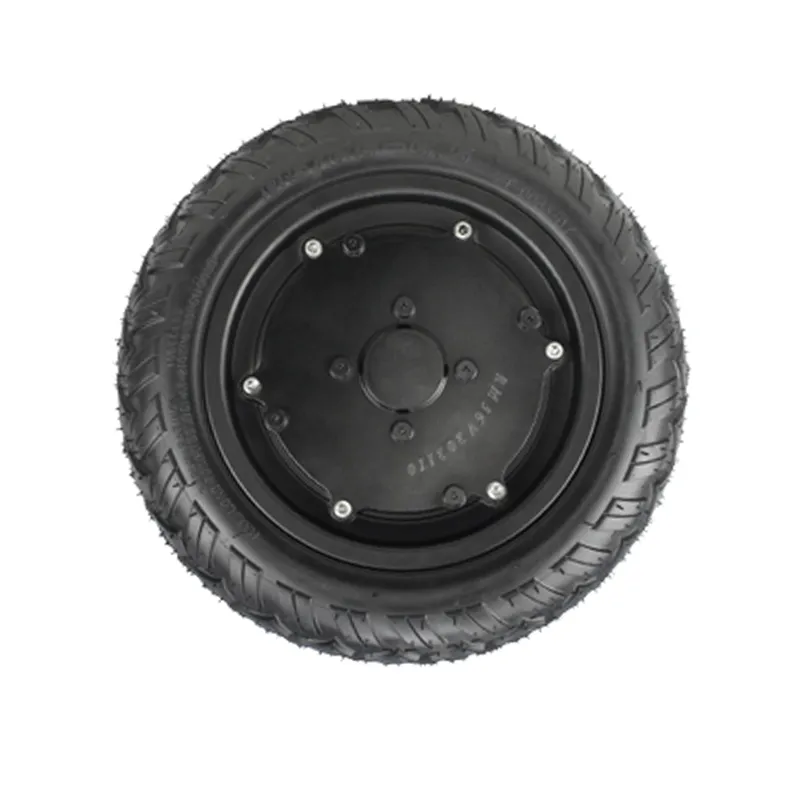
A low-voltage three-electric system is typically customized as an integrated package: motor (e.g., brushless hub motor) + controller (drive controller) + battery pack (energy battery group). The following workflow keeps key decisions visible and traceable.
| Stage |
Key Checkpoints |
Typical Deliverables |
|
1) Requirement Confirmation
|
Align on application scenario, expected performance, constraints, compliance needs (if applicable), and acceptance method. Confirm which parts are in scope: motor, controller, battery pack, or full integration.
|
Requirement checklist, boundary definition, preliminary timeline and sample plan (as agreed)
|
|
2) Parameter Consolidation
|
Convert requirements into measurable parameters: voltage class, power/torque targets, speed range, load characteristics, thermal limits, mounting/interface constraints, wiring/connectors, and control/communication expectations where relevant.
|
Parameter sheet, interface definition notes, risk/unknown list for clarification
|
|
3) Solution Matching
|
Match the consolidated parameters to feasible motor–controller–battery combinations. Identify trade-offs (performance, packaging, cost structure, manufacturability) and confirm the preferred direction before building prototypes.
|
Proposed solution outline, configuration recommendation, BOM direction (as applicable), prototype scope definition
|
|
4) Prototype Build & Validation
|
Build prototype samples and validate against the agreed checkpoints. Typical focus: functional verification, integration fit (mechanical/electrical), basic performance confirmation, and issue tracking/iteration control.
|
Prototype samples, validation plan (as agreed), test/verification records, issue list with corrective actions
|
|
5) Mass-Production Handover & Delivery
|
Confirm the mass-production baseline, quality checkpoints, and packing/labeling requirements. Ensure changes are frozen per the agreed process and that production delivery follows a stable configuration.
|
Production handover package, quality inspection checkpoints (as agreed), delivery plan and after-delivery support alignment
|
Practical tip: The fastest projects are not the ones that “skip steps,” but the ones that lock interfaces and acceptance criteria early—so prototype validation becomes confirmation rather than discovery.
What to Prepare Before Starting (Helps Reduce Iterations)
Application & Load Information
- Use-case description and duty cycle (how the system is used)
- Load characteristics and operating environment (e.g., temperature, dust/water expectations if relevant)
- Target performance: speed, torque, power, and runtime expectations
Interfaces & Constraints
- Mounting dimensions, envelope limits, and assembly constraints
- Electrical interfaces: wiring, connectors, and harness routing preferences
- Control expectations: throttle/command input and any communication needs (if applicable)
Project Controls
- Prototype quantity, target schedule, and validation ownership
- Acceptance criteria and what constitutes “pass/fail”
- Change control approach (how updates are reviewed and approved)
How Shenzhen Jinhaixin Supports Three-Electric Customization
As an integrated manufacturer and trading company with operations headquartered in Shenzhen and production bases in Shenzhen, Dongguan, Changzhou, and Hainan, Shenzhen Jinhaixin Holdings Co., Ltd supports customization with a customer-centered approach and structured quality management—aiming for stable and reliable deliveries for B2B projects.
Coverage Across the Low-Voltage E-Powertrain Stack
Brushless Hub Motors
Support for motor selection and customization aligned to load, speed/torque targets, and installation constraints.
Drive Controllers
Controller matching and parameter alignment to ensure functional compatibility and stable system behavior.
Energy Battery Packs
Battery-pack configuration support based on voltage class, capacity expectations, packaging constraints, and integration requirements.
What “Standardized” Means in Practice
- Clear checkpoints: each stage has explicit inputs/outputs so the next step can start with fewer unknowns.
- Traceable decisions: parameter changes and solution updates are recorded to avoid repeated back-and-forth.
- Integration-first thinking: motor, controller, and battery pack are evaluated as a system, not isolated components.
Start a Customization Discussion
If you are evaluating a low-voltage e-powertrain (three-electric) customization project, you can use the workflow above to prepare your internal inputs and align cross-functional expectations. Shenzhen Jinhaixin can then support solution matching, prototype validation planning, and a controlled handover to mass production based on agreed requirements.
Suggested Inquiry Information
- Target voltage class and expected performance (speed/torque/power)
- Mechanical interface constraints (dimensions, mounting)
- Preferred scope: motor only / controller only / battery pack only / full integration
- Prototype schedule expectations and validation approach
What You Can Expect Next
- Requirement confirmation and parameter consolidation alignment
- Solution matching with key trade-offs and prototype scope
- Prototype build & validation checkpoint agreement
- Mass-production handover planning based on the validated baseline
Note: deliverables and validation scope may vary by application and requirement complexity; all project commitments are confirmed through formal requirement and feasibility review.