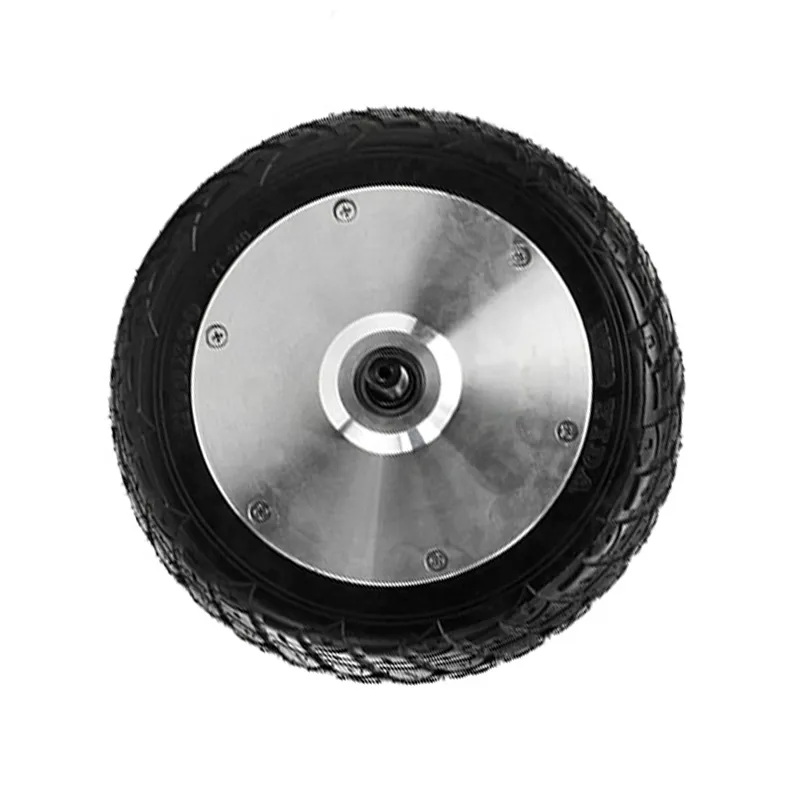
For B2B buyers sourcing a low-voltage e-drive (three-electric) system—a brushless hub motor, drive controller, and energy battery pack—the most expensive mistakes often start with a seemingly rational approach: comparing only unit prices of individual components.
This page outlines common procurement pitfalls and provides a practical evaluation framework focused on system matching, stability, customization feasibility, delivery coordination, and after-sales support—so you can manage total cost of ownership (TCO) and long-term supplier value.

Focus area: complete system sourcing—motor, controller, battery pack—evaluated by matching and lifecycle cost.
In low-voltage e-drive applications, performance and reliability depend on how the motor, controller, and battery pack work together. A lower price on one item can lead to additional costs elsewhere—such as repeated parameter tuning, unexpected heating issues, shortened battery life, unstable operation, schedule delays, or higher support burden during integration and after delivery.
Unit price is measurable, but it is not the system cost. If the three-electric system is not matched, you may pay more in calibration effort, safety margin redesign, or repeated sample rounds.
Matching is not only “can it run.” It includes whether system parameters, protection strategies, thermal behavior, and application loads align in a stable, repeatable way across batches.
If stability and consistency are not assessed before mass supply, problems may surface during ramp-up or in the field—where every diagnosis cycle costs time and reputation.
Low-voltage e-drive projects often require application-specific adaptations. Without clear customization boundaries, version control, and validation steps, schedules can slip and costs can rise.
When motor, controller, and battery pack come from separate sources, engineering changes and delivery timing can become misaligned. Coordinated planning reduces rework and ensures the correct versions arrive together.
For B2B buyers, support quality affects operational continuity. Clear service processes and technical responsiveness help contain downtime and speed up issue closure.
Use the checklist below when evaluating a low-voltage e-drive supplier or comparing multiple suppliers for motor, controller, and battery pack. It keeps the discussion grounded in measurable deliverables and long-term cost drivers.
| Evaluation dimension | What to confirm (examples) | Why it affects TCO |
|---|---|---|
| Three-electric system matching | Defined interface and parameter alignment across motor/controller/battery; clarity on matching responsibilities and deliverables | Reduces integration rework, repeated sampling, and risk of unstable operation |
| Stability & consistency | Batch consistency approach; quality management processes; how issues are traced and contained | Prevents hidden costs from field failures, returns, and production line interruptions |
| Customization feasibility | Clear customization scope, change control, and validation steps; timeline coordination across components | Avoids schedule slippage and uncontrolled engineering changes |
| Delivery coordination | Ability to coordinate motor, controller, and battery pack delivery windows and version alignment | Limits downtime from missing parts, wrong versions, and re-qualification |
| After-sales & technical support | Support workflow clarity; responsiveness; escalation paths; documentation and troubleshooting collaboration | Shortens resolution time, stabilizes operations, and reduces internal coordination cost |
Procurement note: A supplier’s value is reflected in how smoothly your system moves from sample to ramp-up to stable supply—not only in component pricing.
Shenzhen Jinhaixin Holdings Co., Ltd is a trade-and-manufacturing integrated company focused on low-voltage e-drive (three-electric) system design, R&D, customization, manufacturing, and sales. We provide product series that include brushless hub motors, drive controllers, and energy battery packs—with a quality management approach aimed at stable and reliable supply.
Headquartered in Shenzhen, with production bases located in Shenzhen, Dongguan, Changzhou, and Hainan, enabling coordinated manufacturing and delivery planning for B2B programs.
If you are evaluating suppliers for a low-voltage three-electric system, consider aligning RFQ inputs beyond unit price—so quotes can reflect system matching responsibilities, stability expectations, customization scope, delivery coordination, and after-sales support.
Recommended RFQ essentials: application overview, target performance expectations, operating environment, preferred integration interfaces, delivery schedule assumptions, and any required customization notes for motor/controller/battery pack coordination.
This page focuses on procurement evaluation logic and does not imply guaranteed results; final outcomes depend on application requirements, integration conditions, and project execution.

.png?x-oss-process=image/resize,h_800,m_lfit/format,webp)