Low-Voltage 3-Electric System: How Hub Motors, Controllers, and Battery Packs Work Together
This page explains what a low-voltage 3-electric system is and how a brushless hub motor, drive controller, and energy battery pack work together in typical applications. WINAMICS by Shenzhen Jinhaixin Holdings provides a shared framework for B2B customers to support selection, customization, and solution discussions.

A low-voltage 3-electric system (often shortened to “3-electric”) is the coordinated set of motor, drive controller, and energy battery pack that powers many compact electric platforms. Instead of treating each component as a standalone part, a system view focuses on power flow, control signals, and interfaces—so performance targets and customization requirements can be aligned early.
WINAMICS by Shenzhen Jinhaixin Holdings Co., Ltd designs and supplies low-voltage 3-electric solutions for B2B customers, covering brushless hub motors, drive controllers, and energy battery packs—with engineering support for selection and customization discussions.
What “3-Electric” Means in Low-Voltage Applications
1) Brushless hub motor — power output at the wheel
The brushless hub motor converts electrical energy into mechanical torque directly at the wheel. In many small electric platforms, hub motors reduce drivetrain complexity and can improve packaging efficiency by integrating propulsion and wheel assembly.
2) Drive controller — control logic and power management
The drive controller regulates how the motor receives power and responds to commands (such as throttle input). It manages commutation and operating states, and acts as the coordination center between the motor’s operating needs and the battery pack’s power delivery limits.
3) Energy battery pack — stable energy supply
The energy battery pack provides the system’s energy source. In a complete low-voltage 3-electric system, the battery pack is specified alongside the motor and controller so voltage range, current capability, and interface requirements remain consistent throughout the platform lifecycle.
How the Motor–Controller–Battery Work Together
A practical way to understand system synergy is to track two flows: power and signals.
Power flow (energy path)
- Battery pack supplies electrical energy to the controller.
- Controller modulates and delivers power to the hub motor.
- Hub motor outputs torque to move the platform.
Signal flow (control and feedback)
- User command (e.g., throttle) is interpreted by the controller.
- Controller drives the motor according to target response and operating limits.
- System behavior is validated through consistent interfaces and matching component assumptions.
For B2B selection and customization, the key is not one “best” part, but system matching: aligning the motor’s mechanical envelope, the controller’s drive strategy, and the battery pack’s supply capability with your application constraints.
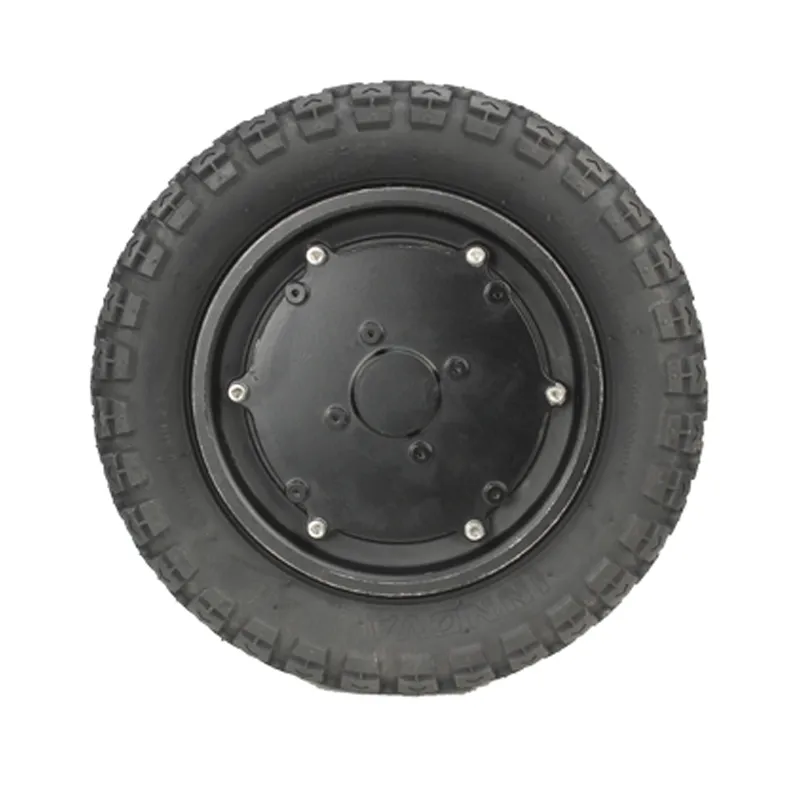
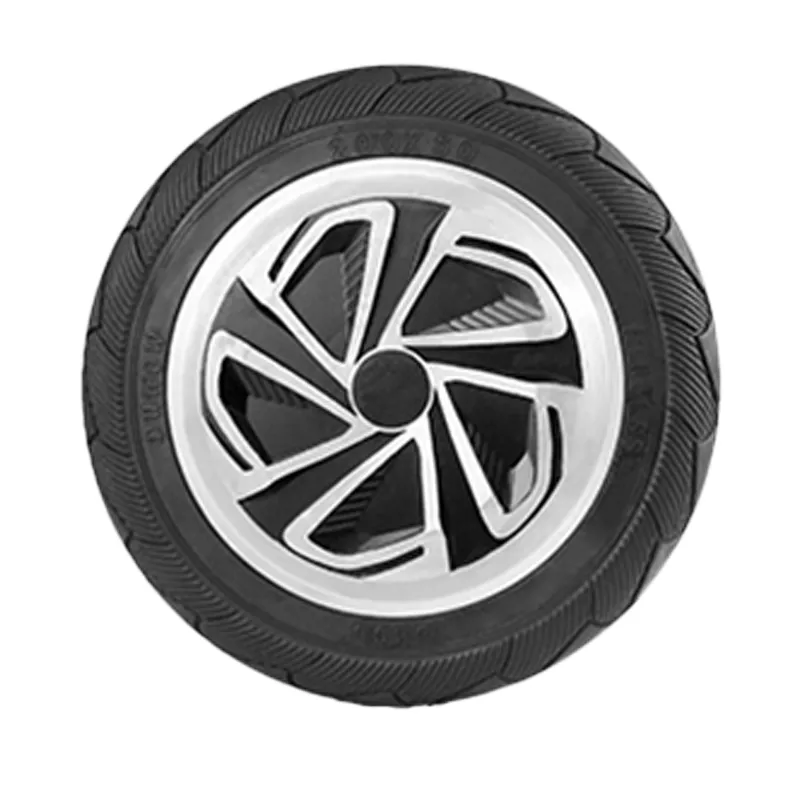
A Concrete Reference: WINAMICS 8" Unilateral Press-Fit Shaft Hub Motor
This WINAMICS conventional hub motor model features a unilateral press-fit shaft structure, designed to enhance stability and improve power transmission efficiency in compact mobility platforms.
| Product type |
Brushless hub motor (unilateral press-fit shaft, conventional model) |
| Wheel size |
8 inch |
| Dimensions |
Diameter 200 mm × Tire width 84 mm |
| Typical applications |
Small go-karts, leisure/recreational equipment |
| Integration note |
Designed for fitment that helps reduce secondary machining and supports efficient installation |
Why it matters in a 3-electric system
- Mechanical compatibility: the motor’s diameter and tire width define packaging and mounting constraints for the full platform.
- Stability focus: unilateral press-fit shaft structure supports stable operation in compact equipment designs.
- Manufacturing efficiency: installation convenience can help reduce assembly time during production.
Key features (as provided)
- Unilateral press-fit shaft structure to enhance stability and improve power transmission efficiency.
- Dedicated fitment for 200 mm diameter × 84 mm tire width, aiming to reduce secondary machining needs.
- Convenient installation to help save labor time.
- Quality materials and manufacturing under a structured quality management approach.
- After-sales support for B2B customers.
B2B Selection & Customization: What to Align Early
To keep motor–controller–battery collaboration predictable, it helps to confirm key requirements as a shared “system language” during early-stage evaluation:
Application constraints
- Platform type (e.g., small go-kart, leisure equipment) and duty profile
- Installation space and mechanical interfaces around the wheel area
- Stability expectations and operating environment
System matching points
- Motor: mechanical envelope and intended use scenario
- Controller: control behavior expectations and interface coordination
- Battery pack: supply capability and pack-level integration considerations
Shenzhen Jinhaixin Holdings operates as an integrated design–R&D–manufacturing supplier with facilities in Shenzhen, Dongguan, Changzhou, and Hainan, supporting B2B customers who need consistent execution from concept alignment to product delivery within the low-voltage 3-electric system scope.
Work With WINAMICS on Low-Voltage 3-Electric Integration
If you are evaluating a brushless hub motor (such as the WINAMICS 8" unilateral press-fit shaft conventional model) and want to ensure smooth collaboration with a drive controller and energy battery pack, we can support selection discussions and customization planning based on your platform’s mechanical and system-level needs.
Focus: low-voltage 3-electric system (motor–controller–battery)
Product line: hub motor • controller • battery pack
B2B: selection • customization • delivery support