If you're designing or maintaining automation systems, you know that even a small inconsistency in motor speed can lead to major issues — especially in precision applications like robotics, medical devices, or packaging lines. That’s where Hall effect sensors come in.
A Hall sensor detects changes in magnetic flux and converts them into electrical signals — typically voltage pulses — that the motor controller uses for feedback. In low-speed motors (below 300 RPM), this real-time data is critical. According to industry benchmarks from IEEE, proper Hall signal integration improves speed regulation accuracy by up to 95% compared to open-loop control.
“We saw our CNC machine noise drop by 40% after optimizing Hall sensor placement — it wasn’t just quieter, it was more repeatable.”
— Maria Chen, Senior Automation Engineer at TechFlow Robotics
When your motor runs unevenly or stalls unexpectedly, check the Hall signal waveform using an oscilloscope. A clean square wave indicates healthy operation; irregular spikes or missing pulses often point to misalignment, worn magnets, or wiring issues. For example, a 2023 study by Siemens found that 67% of low-speed motor failures were linked to poor Hall sensor calibration — not mechanical wear.
Most engineers overlook basic maintenance: keep sensors dry, avoid strong external magnetic fields during installation, and inspect connectors quarterly. With routine checks every 3–6 months, you can extend sensor life by 40–60%, reducing unplanned downtime by up to 30%. At Shenzhen Jinhaixin Holding Co., we recommend replacing Hall modules every 18 months in high-vibration environments — a simple step that prevents costly motor rebuilds.
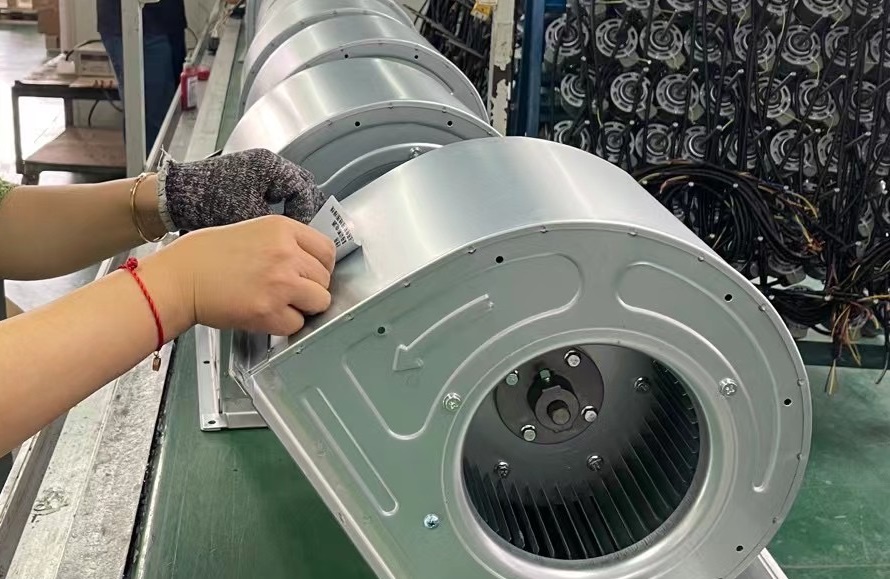
Unlike aftermarket add-ons, integrated Hall sensors — like those built into Jinhaixin’s 5-inch low-speed motors — ensure perfect alignment, minimal signal loss, and faster setup times. These motors are ideal for applications requiring consistent torque at low speeds, such as conveyor systems, laboratory equipment, and automated guided vehicles (AGVs).
Discover how our 5-inch low-speed motors with factory-integrated Hall sensors deliver unmatched performance, quiet operation, and long-term stability — all backed by over 10 years of industrial use.
Explore High-Reliability Motors Now