For low-speed, heavy-duty mobile equipment, motor selection is not simply a choice between two motor types. It is a drive-system decision shaped by required traction, load variation, operating speed, available installation space, wheel arrangement, controller matching, and battery-system integration.
Jinhaixin develops low-voltage drive-system solutions for mobile equipment, including brushless hub motors, motor controllers, and energy battery packs. When evaluating a brushless hub motor versus a geared motor, equipment teams should assess the complete operating condition rather than relying on a single performance indicator.
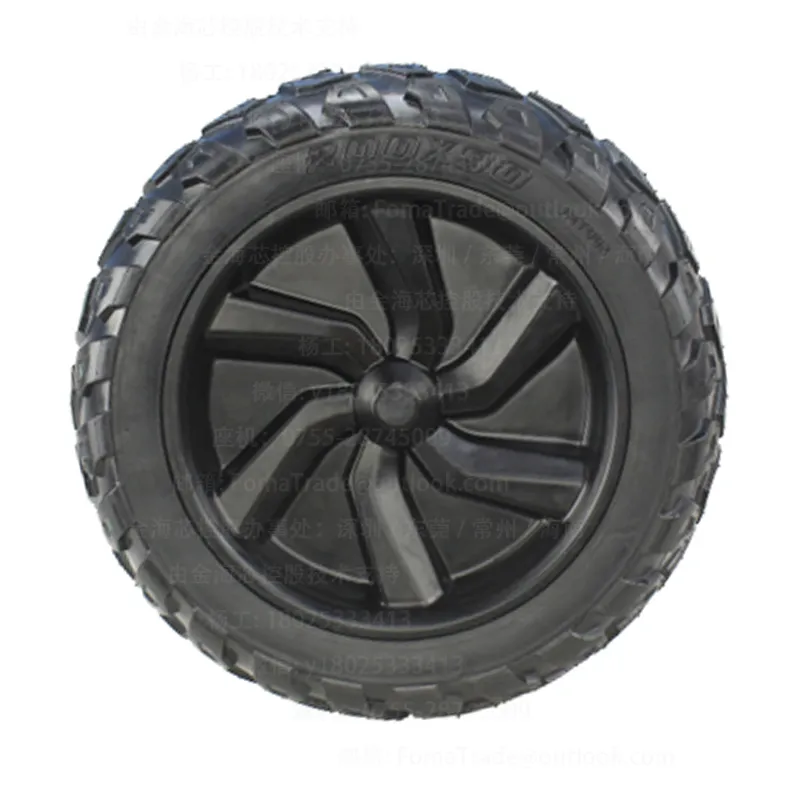
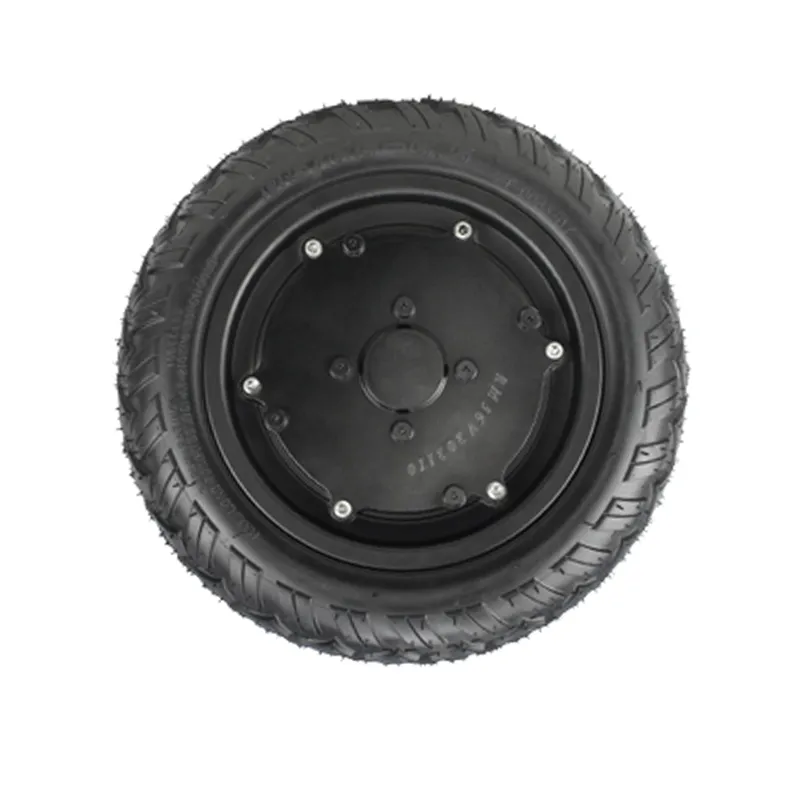
A brushless hub motor places the motor within or closely integrated with the wheel assembly. In a mobile equipment design, this approach can reduce the need for external drive transmission components and support a compact wheel-drive layout. Its suitability depends on whether the wheel-integrated configuration can meet the vehicle’s traction, load, duty-cycle, and packaging requirements.
A geared motor combines a motor with a reduction mechanism to deliver output through a geared drive arrangement. For low-speed equipment, reduction can be considered where the application requires a particular relationship between motor speed and wheel-side torque. The final arrangement also needs to account for transmission layout, maintenance access, mounting structure, and overall vehicle integration.
| Evaluation Area | Brushless Hub Motor Considerations | Geared Motor Considerations |
|---|---|---|
| Vehicle integration | Wheel-integrated drive can support a simplified drivetrain layout and may be useful where compact integration is a priority. | Requires consideration of motor, gearbox, transmission path, and mounting locations within the chassis. |
| Traction requirement | Should be assessed against starting load, slope operation, wheel diameter, tire condition, and expected load changes. | Reduction arrangement is evaluated as part of the required motor-speed and output-torque relationship. |
| Low-speed operation | Motor, controller, and wheel configuration should be selected for stable operation in the intended low-speed range. | Gear reduction may be part of the solution when output-speed requirements differ from motor operating characteristics. |
| System matching | Requires coordinated matching of hub motor, controller, battery voltage, protection logic, and vehicle controls. | Requires coordinated matching of motor, gearbox, controller, battery system, and mechanical drive components. |
| Service planning | Service access should be reviewed in relation to wheel assembly removal and the working environment. | Service planning should include access to the reduction unit and associated mechanical transmission components. |
For material handling vehicles, mobile robots, and specialized mobile equipment, a drive motor should be evaluated against real operating conditions. A system designed for smooth indoor travel on level surfaces may face different requirements from equipment operating on ramps, uneven ground, or changing payloads.
A brushless hub motor can be a practical direction when the equipment design benefits from an integrated wheel-drive concept. It may be considered for applications where reducing external transmission components, organizing the chassis efficiently, or creating independent wheel-drive layouts is important to the vehicle design.
Selection still requires a technical review of wheel-side load, heat dissipation, environmental exposure, traction demand, and compatibility with the selected battery pack and controller.
A geared motor may be considered where the vehicle architecture is designed around a separate motor-and-reduction drive path, or where the required output characteristics call for a specific reduction relationship. This approach should be reviewed as part of the complete mechanical and electrical layout, not in isolation from the rest of the vehicle.
Important selection principle: Gear reduction does not by itself determine whether a drive system is suitable for heavy-duty operation. The usable result depends on the combined design of motor capability, reduction arrangement, wheel size, vehicle load, controller settings, battery output, operating terrain, and duty cycle.
For mobile equipment traction, the motor is one part of a coordinated system. A well-defined selection process connects the drive unit with the controller, battery pack, mechanical structure, and vehicle-level operating requirements.
Jinhaixin focuses on low-voltage three-electric-system development and customization, covering brushless hub motors, drive controllers, and energy battery packs. For low-speed heavy-duty mobile equipment, this system perspective helps project teams evaluate the relationship between traction needs, vehicle integration, and electrical matching before finalizing a drive solution.
Whether a brushless hub motor or a geared motor is the more appropriate direction depends on the specific equipment and its working conditions. Providing clear information about load, speed, terrain, wheel structure, installation space, and battery platform supports a more relevant technical evaluation and customized drive-system discussion.