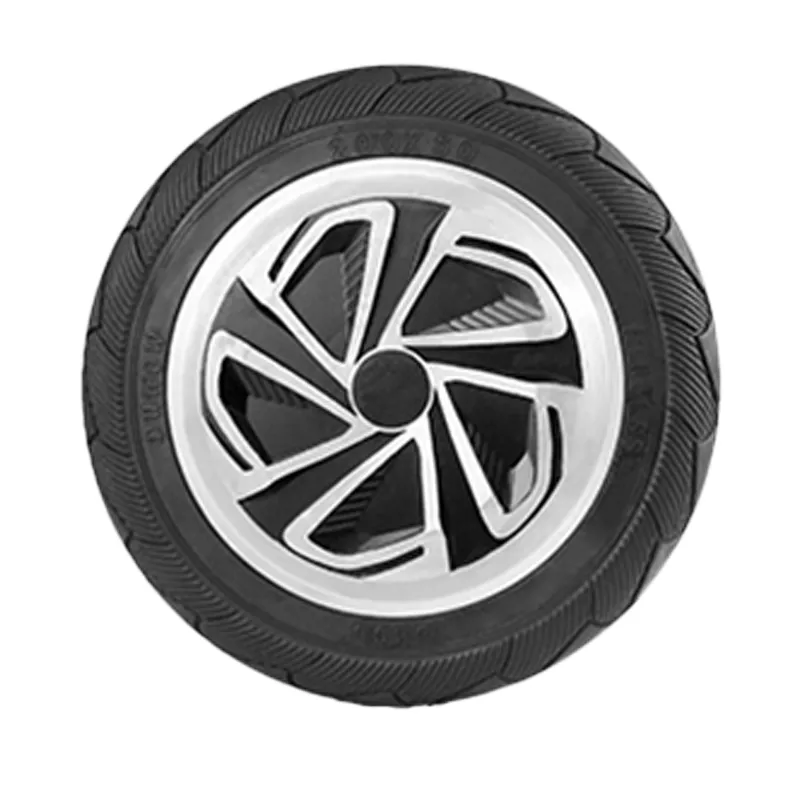
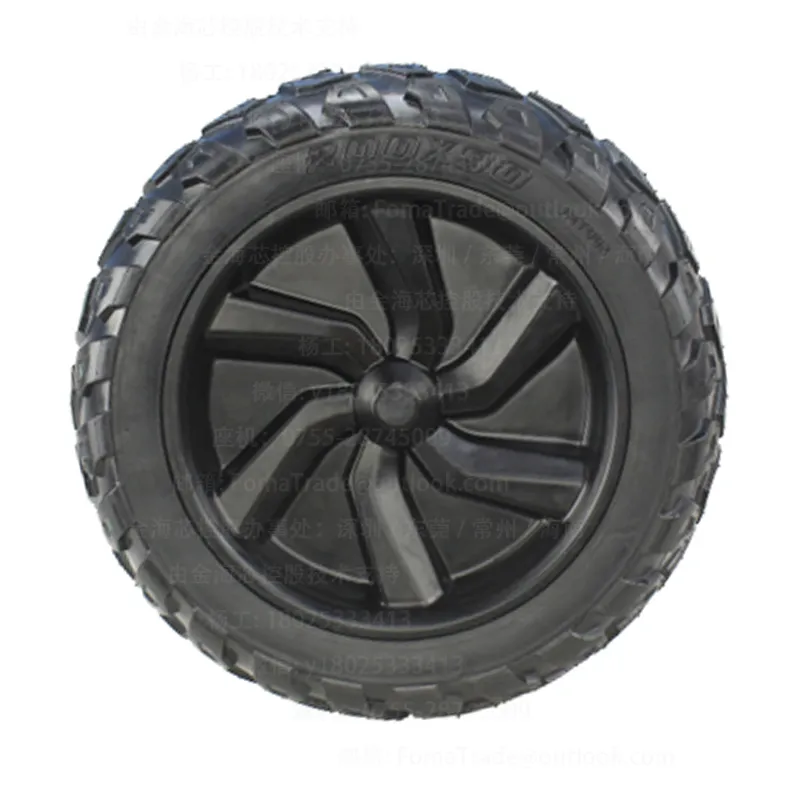
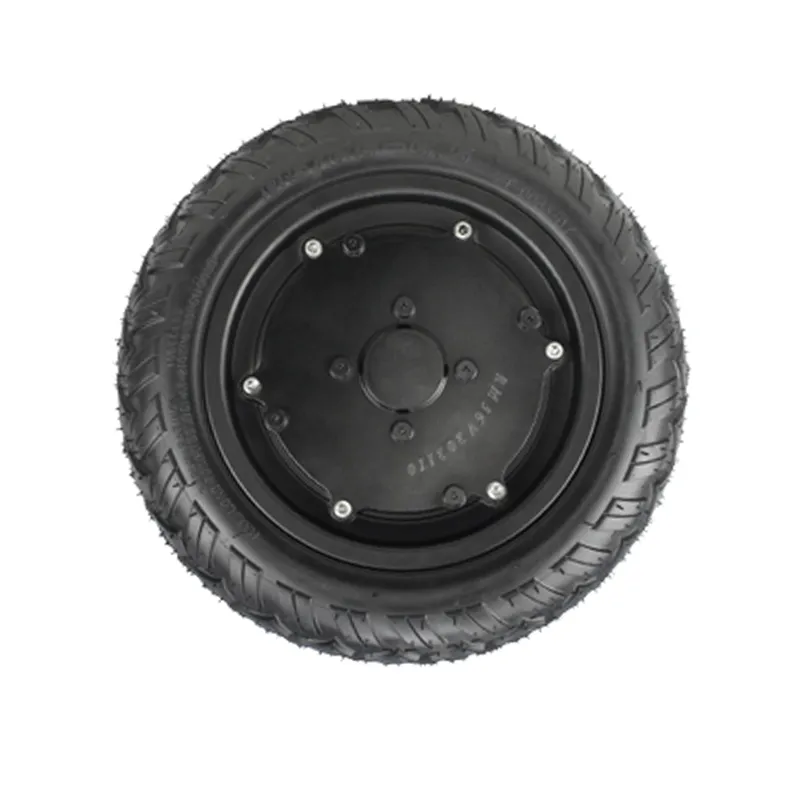
Application Logic of Brushless Hub Motors in B2B Equipment: Performance, Efficiency, and Integration
Shenzhen Jinhaixin Holdings Co., Ltd explains how brushless hub motors are applied in B2B equipment, focusing on integration benefits, power efficiency, control responsiveness, maintenance considerations, and practical suitability boundaries for technical evaluation.

In many B2B equipment designs, drivetrain decisions are driven by packaging constraints, energy efficiency targets, controllability requirements, and serviceability expectations over long operating cycles. A brushless hub motor—integrated directly into a wheel assembly—offers a practical route to compact propulsion and responsive control when the application fits the right torque/speed and environmental boundaries.
Technical focus of this page: integration advantages, power efficiency, control responsiveness, maintenance considerations, and suitability boundaries for evaluating brushless hub motors in B2B equipment.
Why brushless hub motors are used in B2B equipment
Space-saving integration
By placing the motor at the wheel, hub architectures can reduce or remove intermediate mechanical transmission elements. This often simplifies mechanical layout, helps with compact chassis designs, and can shorten drivetrain assembly chains.
Power efficiency considerations
Brushless motor operation is commonly selected for efficiency-oriented systems. In equipment where battery life, heat management, and steady operation matter, evaluating efficiency across the duty cycle is a key part of hub motor selection.
Fast control response
Many B2B devices need consistent speed control, stable torque output at low speeds, and smooth start/stop behavior. With an appropriate controller strategy, brushless hub motors can support precise, responsive motion control.
Maintenance & serviceability
Fewer drivetrain parts can mean fewer mechanical wear points. However, service planning should consider wheel-module accessibility, cabling routes, connector protection, and the practicality of replacing a wheel/motor module in the field.
Application logic: how to evaluate a hub-motor choice
For technical evaluation, it helps to treat a brushless hub motor as part of a low-voltage “three-electric” system: motor + drive controller + energy battery pack. The decision is rarely about the motor alone—system matching determines real-world performance and reliability.
-
Define the duty cycle: continuous load, peak events, start/stop frequency, gradient/rolling resistance expectations, and typical operating temperature range.
-
Map torque & speed boundaries: verify the required torque/speed range and whether the hub format can meet both low-speed torque needs and maximum speed targets without thermal stress.
-
Select control strategy: determine response requirements (acceleration, holding torque behavior, speed stability) and align them with controller capabilities and sensors/feedback approach as applicable.
-
Check packaging constraints: wheel size, mounting interfaces, cable exits, ingress protection needs, and available space for controller and battery integration.
-
Plan serviceability: define acceptable replacement time, module access method, connector robustness, and maintenance intervals consistent with the equipment’s operating model.
Integration advantages (what changes at the system level)
Mechanical integration
- Simplified drivetrain packaging for compact equipment designs
- Potential reduction of intermediate mechanical elements compared with centralized drive layouts
- Modular wheel-unit thinking can support faster assembly and replacement planning
Electrical & control integration
- Closer coupling between motor behavior and controller tuning for responsive motion
- System-level efficiency evaluation becomes clearer when motor/controller/battery are matched
- Wiring, connectors, and protection design become key to stability and maintainability
Suitability boundaries: when to be cautious
Brushless hub motors are not a universal fit. Before finalizing a solution, engineers typically validate boundaries that influence torque delivery, thermal behavior, packaging, and field service. The checkpoints below are practical items to review during concept and prototyping.
| Evaluation area |
What to confirm |
Why it matters |
| Torque / speed range |
Operating points across typical and peak loads |
Ensures performance targets are met without overheating or instability |
| Control responsiveness |
Acceleration, smoothness, low-speed control needs, and tuning approach |
Affects usability, precision motion, and system feel under real loads |
| Packaging constraints |
Wheel size, mounting method, cable exit and protection, space for controller/battery |
Determines integration feasibility and reduces redesign risk |
| Maintenance & serviceability |
Module replacement process, connector access, field repair expectations |
Supports uptime planning and predictable lifecycle costs |
| Efficiency & thermal behavior |
Heat paths, continuous operation limits, and energy budget by duty cycle |
Protects component longevity and reduces power-system derating risk |
Practical guidance: Treat hub motor selection as a system-matching task. Confirm required torque/speed range, controller strategy, packaging constraints, and serviceability needs before locking the mechanical layout.
How Shenzhen Jinhaixin supports B2B integration
Shenzhen Jinhaixin Holdings Co., Ltd is a manufacturing & trading integrated company focused on low-voltage three-electric systems—covering brushless hub motors, drive controllers, and energy battery packs. With headquarters in Shenzhen and production bases in Shenzhen, Dongguan, Changzhou, and Hainan, we support B2B customers who require stable supply and engineering-oriented customization.
What we can align with you
- Target performance boundaries and duty cycle assumptions
- Motor–controller–battery matching for integration feasibility
- Packaging review: interfaces, cabling routes, and module accessibility
Typical B2B evaluation materials
- Integration-oriented specification discussion (torque/speed, voltage class, envelope)
- Controller behavior expectations (response, smoothness, operating modes)
- Serviceability assumptions for production and after-sales planning
If you are evaluating brushless hub motors for a B2B device, preparing your torque/speed targets, duty cycle description, packaging constraints, and maintenance expectations will accelerate feasibility review and solution definition.