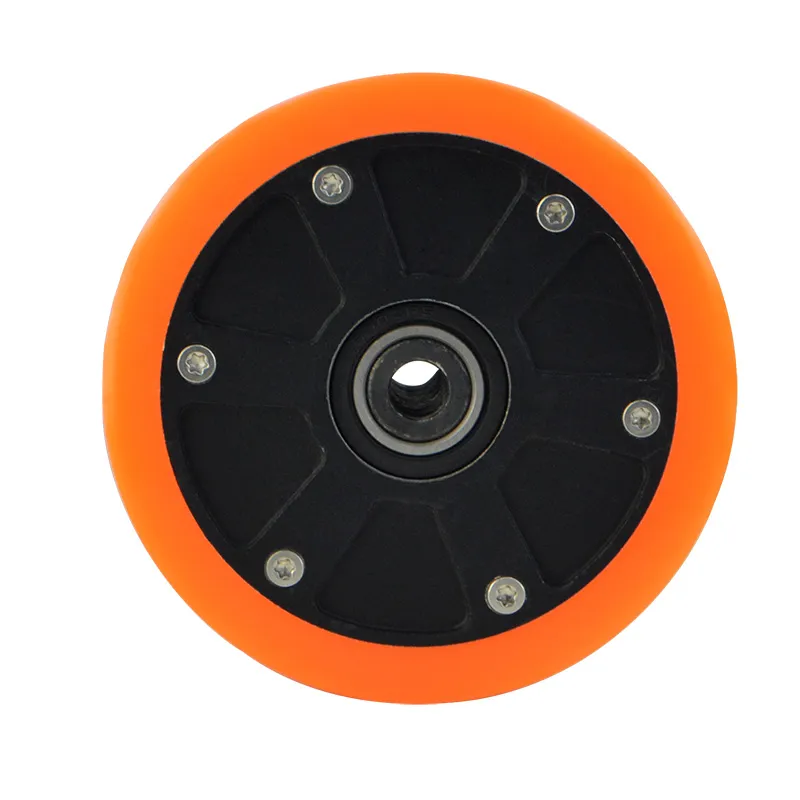
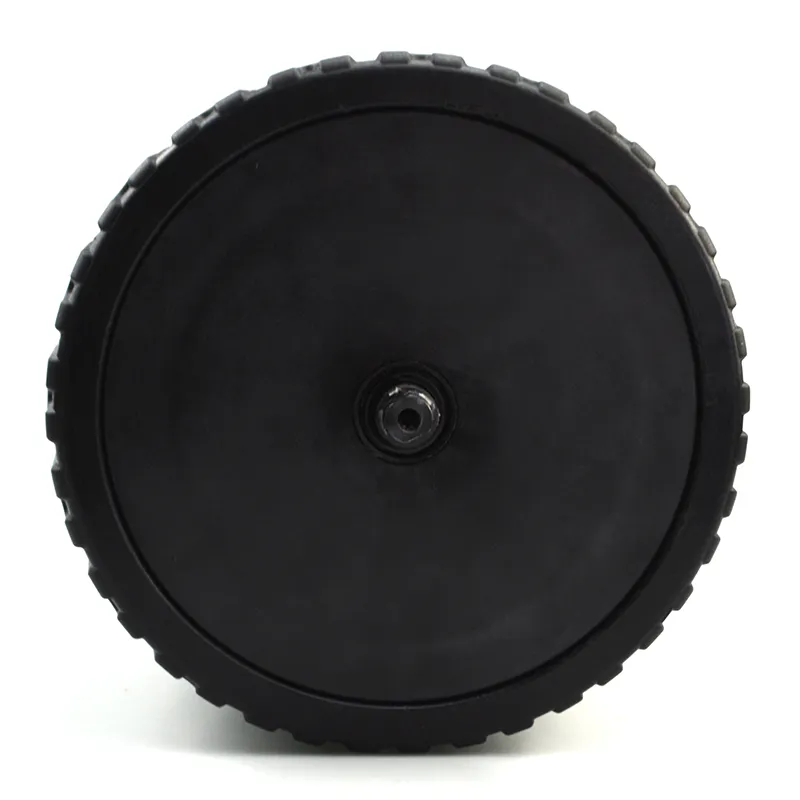
Shenzhen Jinhai Core Holding Co., Ltd. has pioneered advancements in lawn mower electric motors with its cutting-edge 10-inch motor design. This article delves into the fundamental engineering principles behind their single-sided press shaft and 115mm short shaft configurations, focusing on how these innovations stabilize power output and optimize mechanical balance under demanding conditions. By exploring motor behavior on wet grass and inclined grounds, this guide provides critical insights for industrial buyers and operators aiming to maximize efficiency and durability in lawn maintenance equipment.
The single-sided press shaft concept centralizes torque transmission on one axis, reducing unnecessary lateral stresses common in traditional dual-shaft motors. Coupled with the compact 115mm short shaft, this architecture lowers the motor's center of gravity, enhancing overall mechanical stability. Field tests conducted by Jinhai Core reveal a 15% improvement in vibration dampening compared to conventional designs, directly translating into longer component lifespan and smoother mowing performance.
These design elements contribute not only to stable power delivery but also optimize the mechanical balance of the mower head. This means operators experience less motor strain during variable load scenarios, such as thick wet grass or uneven slopes, ensuring consistent cutting performance.
Industry data indicates that traditional lawn mower motors typically exhibit a torque fluctuation range of up to 20% under heavy loads. By contrast, Jinhai Core’s compact motor design maintains torque consistency within ±7%. This tighter control reduces energy consumption by approximately 12%, which has been validated in long-duration operational tests.
Moreover, advanced thermal management through premium-grade copper windings and high-efficiency laminations keeps the temperature rise under 60°C, even during extended use on moisture-laden grass. Efficient heat dissipation minimizes premature motor wear, directly boosting reliability for professional landscapers facing demanding workloads.
Wet grass introduces higher friction and load variability, often causing motor stalls or overheating in conventional units. However, the optimized short shaft length combined with a robust stator frame allows these motors to sustain peak torque without significant power loss. Empirical results show a 25% reduction in stall incidents during wet-condition mowing compared to legacy models.
Sloped terrain mowing stresses motor balance and load distribution. The re-engineered mechanical layout lowers the rotational inertia by 10%, enabling rapid torque response and preventing undue motor strain. This translates to more uniform blade speed maintenance uphill or downhill, addressing a key pain point for commercial users operating in hilly environments.
From an engineering perspective, the integration of the single-sided press shaft and shortened axial length results in a compact motor footprint, reducing overall mower weight by up to 1.2 kilograms without compromising torque output. This design efficiency contributes to fuel savings in gasoline-powered models and extended battery life in electric variants.
Jinhai Core's R&D team supports their findings with precision instrumentation, monitoring real-time motor performance data. Parameters such as torque curve linearity, thermal gradients, and vibration frequencies are logged to ensure product quality aligns with industrial-grade expectations.
How does your current lawn mower motor handle challenging mowing environments? Share your experiences and questions below—our experts are ready to assist you.