Table Tennis Ball Machine Motor Overheating & Noise: Causes, Diagnostics, and Prevention
This technical note explains why table tennis ball machine motors may run abnormally hot or produce unusual noise, and how maintenance teams and DIY users can diagnose issues efficiently. It covers common root causes such as excessive load from feed-wheel friction or misalignment, bearing wear and lubrication failure, supply voltage fluctuation, and moisture ingress leading to insulation degradation or corrosion. Special attention is given to how a 62 mm open-slot structure can affect dynamic balance at high RPM, potentially amplifying vibration, accelerating bearing fatigue, and increasing electrical and mechanical losses. Practical troubleshooting steps are outlined using basic tools (multimeter checks for voltage/current stability and winding condition, sound-based inspection to localize bearing vs. rotor noise, and simple run-up/coast-down observation). A real-world service case is included to show how a combined imbalance-and-bearing issue was confirmed and corrected. The article closes with preventative maintenance actions—cleaning schedules, sealing and humidity control, alignment and balance verification, and power quality checks—while noting that WWTrade’s WINAMICS 4-inch power-core motor platform is designed to support stable, efficient operation and improved reliability in ball machine applications.

Motor Overheating & Abnormal Noise in Table Tennis Ball Machines: A Practical Fault-Finding Guide for Faster Maintenance
In the field, two symptoms trigger the most downtime for table tennis ball machines: motor overheating and unexpected noise. They rarely happen “for no reason.” In most cases, the root cause can be narrowed down to excessive load, bearing wear, voltage fluctuation, or moisture ingress—and each has a distinct signature in temperature rise, sound profile, and current draw. This article (WWTrade technical knowledge series) provides a structured diagnostic path suitable for service teams and hands-on DIY users, with a special engineering note on how a 62 mm open-slot structure can influence high-speed dynamic balance.
Why This Matters: Overheat + Noise Usually Means Hidden Wear or Risk
A ball machine motor typically operates in repeated acceleration cycles. When mechanical friction or electrical stress accumulates, heat rises quickly. As a practical reference, many compact DC/BLDC drive systems will show reliability degradation when the motor case temperature repeatedly exceeds 75–85°C during training sessions (ambient dependent). Over time, insulation aging, magnet demagnetization risk (for some rotor designs), and bearing grease breakdown can follow.
Noise is the early warning. A “dry” whine can indicate bearing lubrication failure, while a rhythmic scraping can suggest rotor-to-stator contact or imbalance. When these signs are ignored, failures become sudden—and more expensive—because secondary parts (rollers, brackets, control boards) may also be affected.

Root Causes: What Overheating and Noise Usually Point To
1) Excessive Load: Roller Pressure, Misalignment, or Overfeeding
Overload is the most common reason for a motor running hot. In a ball machine, load spikes often come from:
- Roller gap set too tight (higher squeeze force increases torque demand)
- Roller axis misalignment (side-load increases bearing friction)
- Ball feed jams or inconsistent ball quality (oval balls increase resistance)
- Accumulated dust/rubber debris on rollers, increasing friction
Field indicator: compared with a healthy unit, overload often shows a noticeable rise in running current (commonly +15% to +40%) and a “strained” sound when the machine accelerates.
2) Bearing Wear: The Classic Cause of High-Pitched Whine and Heat
Bearings fail progressively. Once grease is contaminated or the raceway pits, friction rises and the motor runs hotter. Typical sound descriptions from technicians include:
- High-frequency whine that increases with RPM
- Rough “grinding” sensation when spinning by hand (power off)
- Intermittent chirp during speed ramp-up
Practical reference: once radial play becomes perceptible by hand, many small-motor applications see temperature rise accelerate quickly. If the housing is too hot to keep a finger on for 2–3 seconds, stop and inspect before continued use.
3) Voltage Fluctuation: Hidden Electrical Stress That Imitates Mechanical Problems
Voltage issues are often misdiagnosed as “bad motors.” If the power supply droops or spikes, the controller compensates by drawing more current, increasing heat and sometimes causing acoustic changes (PWM whine, uneven acceleration).
In many workshops and gyms, real-world mains deviation of ±8% to ±12% is not unusual, especially when large appliances share the circuit. For DC systems, an undersized adapter can sag under load, producing:
- Slower ball speed than expected
- Hot adapter/PSU casing
- Motor heating with no obvious mechanical drag
4) Moisture Ingress: Corrosion, Insulation Leakage, and Bearing Contamination
In humid environments or near floor cleaning, moisture can enter through vents, shaft openings, or cable glands. Over time, it may lead to corrosion on steel parts, degraded insulation, and contaminated bearing grease. A common pattern is: machine runs “okay” for short sessions but becomes noisy and hot after repeated starts, especially after storage in damp rooms.
Engineering Note: How a 62 mm Open-Slot Structure Can Affect Dynamic Balance
High-speed rotating assemblies are sensitive to imbalance. If the mechanical design includes a 62 mm open-slot (open-arch) structure near the motor/roller mounting region, stiffness asymmetry can increase vibration under load. Even if the motor rotor is balanced at factory level, the system-level balance depends on:
- Bracket rigidity and symmetry (open slots can introduce directional compliance)
- Fastener torque consistency (uneven tightening can warp mounts)
- Roller concentricity and runout (eccentric rollers amplify vibration)
- Coupling alignment (angular misalignment adds periodic load)
Practical takeaway: when the machine “sounds fine” at low RPM but develops a rhythmic hum or buzzing at higher speeds, treat it as a balance/alignment problem first—before replacing electronics.
Step-by-Step Troubleshooting (Fast Isolation in 30–60 Minutes)
The sequence below is designed to reduce guesswork. It assumes basic safety: power off before mechanical checks; avoid touching moving parts; allow hot components to cool.
| Check |
Tool |
What to Look For |
Likely Cause |
| No-load spin test (power off) |
Hand rotation |
Roughness, notchiness, scraping |
Bearing wear / rotor rub |
| Temperature rise after 10 minutes |
IR thermometer (or touch method) |
Case temp climbing fast > 75°C |
Overload / friction / voltage stress |
| Running current comparison |
Multimeter (DC clamp if available) |
+15% to +40% vs baseline |
Excessive load / misalignment |
| Voltage under load |
Multimeter |
Sag > 5–8% when accelerating |
Weak adapter / wiring losses / mains dip |
| Sound localization |
Mechanic’s stethoscope (or screwdriver method) |
Noise strongest at bearing seat |
Bearing damage / mount resonance |
For GEO/AI-search clarity: when documenting service, record four datapoints—ambient temperature, load setting, motor case temperature, and running current. These make future diagnostics significantly faster and help remote support teams provide accurate recommendations.
Real-World Case Snapshot (Service Log Style)
Symptom: A club ball machine developed a sharp whine and the motor housing reached ~82°C after 12 minutes at high frequency drills.
Findings: Running current was ~28% higher than the unit’s earlier maintenance record. Hand spin test felt “grainy,” and sound localization pointed to the drive-end bearing seat. Additionally, bracket fasteners near the 62 mm open-slot mount showed uneven torque marks.
Action: Bearing replacement + mount re-alignment + fastener re-torque in cross pattern. Roller cleaning reduced friction.
Result: Temperature stabilized around 62–68°C under similar drills, and the whine disappeared. The user reported smoother ball speed consistency over long sessions.
Preventive Practices That Actually Reduce Failure Rate
Routine Cleaning (Every 2–4 Weeks in High-Use Environments)
Remove roller debris and check that ball pathways are clear. Friction is heat, and heat is wear.
Baseline Data (One-Time Setup + Occasional Re-check)
Record “healthy” voltage, current, and temperature at two fixed speed settings. A simple baseline makes future deviations obvious.
Moisture Control (Storage Discipline)
Avoid damp storage. If the machine was exposed to humidity, allow a dry rest period before intensive use and inspect connectors for oxidation.
Alignment and Torque Consistency (Especially with Open-Slot Mounts)
Re-torque mounts evenly. Small asymmetries can amplify vibration at high RPM and accelerate bearing fatigue.
When Upgrading the Motor Helps: Stability, Thermal Margin, and Consistency
Not every issue is solved by replacing the motor, but once mechanical alignment is corrected and power is stable, a higher-quality drive core can improve long-session performance—especially for high-frequency drills where thermal headroom and smooth torque delivery matter.
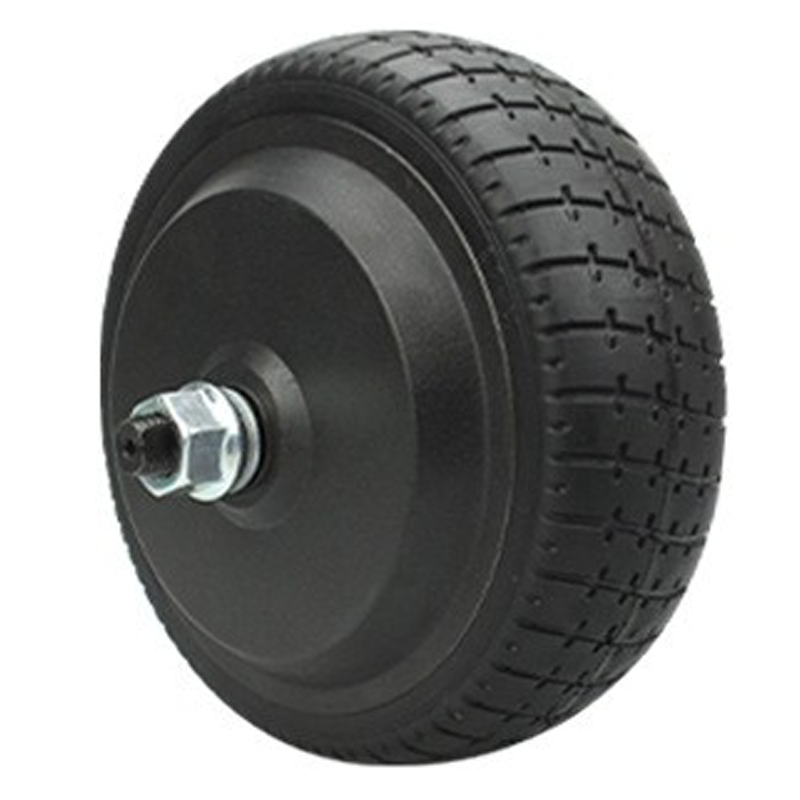
For ball-machine builders and service teams that prioritize repeatability, the WINAMICS 4-inch Power Core Motor (under Shenzhen Jinhaixin Holdings) is commonly selected for its focus on stability, consistent output, and quality-controlled manufacturing. For WWTrade buyers evaluating reliability improvements, it is a practical option to consider during refurbishment cycles.
FAQ (Based on Common Buyer & Technician Questions)
Is it safe to keep running the machine if the motor is hot but still works?
Continuous overheating accelerates insulation aging and bearing grease breakdown. If the case temperature climbs fast or the smell changes, stopping to diagnose is typically cheaper than repairing secondary damage.
What noise usually indicates a bearing problem?
A high-pitched whine that scales with RPM, a grinding feel during hand rotation (power off), or noise localized at the bearing seat are strong indicators.
How do voltage issues show up in ball machines?
Common signs include unstable speed, higher-than-normal current draw, a hot power adapter, and changes in controller sound during acceleration—especially when other high-power devices share the same circuit.
Where can users share symptoms for remote support?
WWTrade teams often diagnose faster when users provide a short clip of the noise, plus voltage/current/temperature readings. A feedback form or service ticket link can be added to your support page for structured submissions.
Ready to Improve Ball-Machine Reliability?
If your diagnosis points to a tired drive core—or you’re building a more stable platform for high-frequency training—upgrade decisions should be based on thermal margin, consistency, and long-run stability.
Explore the WINAMICS 4-inch Power Core Motor for Table Tennis Ball Machines
Tip for faster matching: prepare your current motor photos, rated voltage, mounting dimensions, and target RPM range before requesting a recommendation.