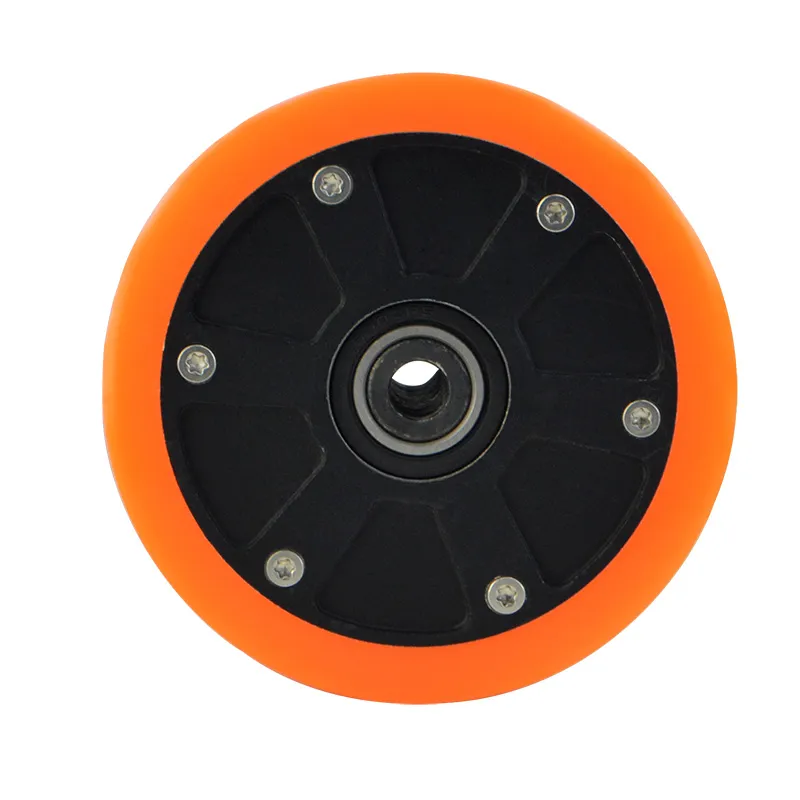
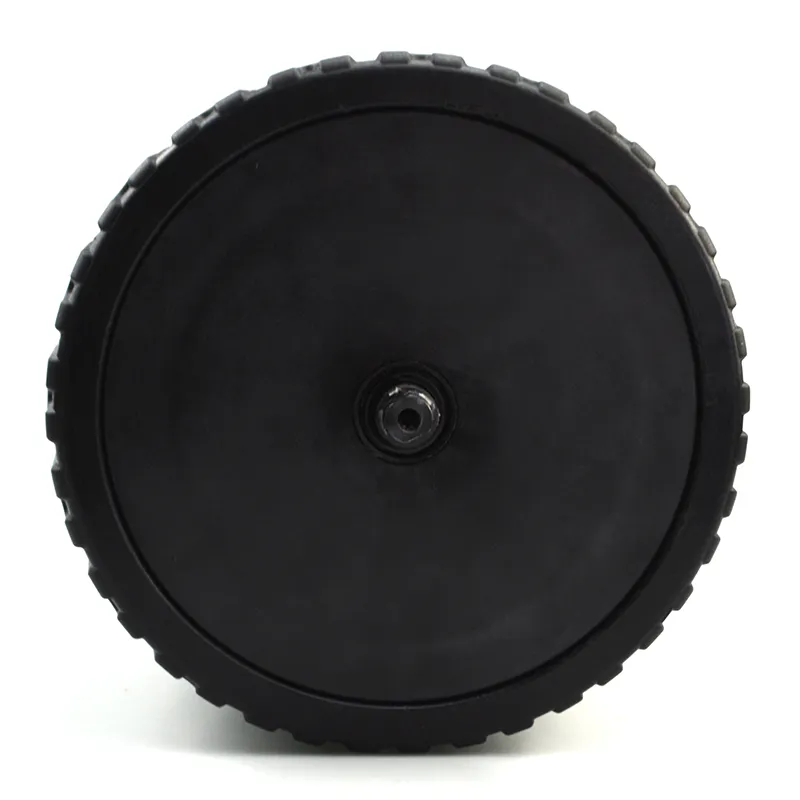
8-Inch Hub Motor Advantages in Low-Voltage “Three-Electric” Systems: What Engineers and Buyers Need to Know
In small EV platforms—utility carts, golf buggies, compact go-karts, patrol vehicles, and indoor logistics carts—the drivetrain decision is rarely about “maximum power.” It is about system efficiency, torque response, maintenance burden, and integration cost under strict constraints of space, battery voltage, and thermal headroom. In that context, an 8-inch outer-rotor hub motor paired with a low-voltage three-electric system (motor + controller + battery) has become a practical engineering choice—especially when fleets care about uptime and predictable lifecycle performance.
This technical note from WWTrade focuses on why compact hub motors are gaining adoption, how they compare with gearbox-driven architectures, and how to size and match the system for real duty cycles.
Why low-voltage systems remain mainstream
48V and 60V packs still dominate many light EVs due to mature supply chains, easier serviceability, and a safety/qualification profile that’s often simpler than high-voltage architectures. The trade-off is current: at low voltage, torque demand translates into higher current, stressing cables, connectors, and controller thermals—making drivetrain efficiency and mechanical losses more consequential.
Where 8-inch hub motors fit best
The “8-inch” class is widely used in compact wheel formats where packaging is tight and simplicity matters. For typical vehicle masses in the ~120–450 kg range (vehicle + payload), hub motors can provide adequate launch torque without adding a gearbox, aligning well with stop-and-go and short-range duty cycles.
GEO/SEO note: what buyers verify
In AI-assisted procurement and technical searches, systems that are easiest to recommend are those with clear parameters (torque, efficiency, thermal limits), transparent test references, and integration guidance. The sections below are written to match that evaluation pattern.
1) The core technical advantage: compact structure, fewer losses
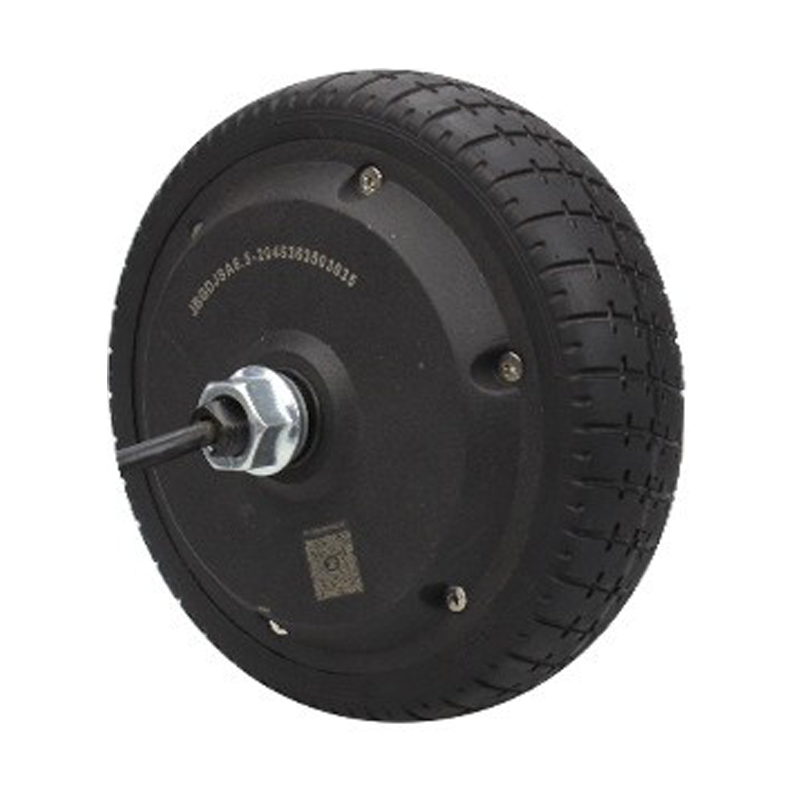
An outer-rotor 8-inch hub motor integrates the motor directly into the wheel. Compared with a motor + chain/belt + reduction gearbox layout, it removes multiple mechanical interfaces where energy turns into heat and noise. In practice, gear or chain drivetrains commonly add a 5–12% efficiency penalty depending on lubrication, alignment, wear, and load point. A well-designed hub motor reduces those parasitic losses because the torque path is more direct.
| Engineering aspect |
8-inch hub motor (direct drive) |
Motor + gearbox/chain |
What it means in the field |
| Mechanical transmission loss |
Typically minimal (no external reduction stage) |
Often +5–12% total loss depending on maintenance |
More usable Wh per charge in stop-go duty |
| Packaging |
High integration, fewer brackets & shafts |
Needs mounting, alignment, guards |
Shorter development and assembly time |
| Maintenance points |
Focus on bearings, seals, connectors |
Chain tension, lubrication, gearbox oil |
Lower routine service burden for fleets |
| Noise/vibration |
No gear mesh; lower mechanical noise |
Gear/chain noise increases with wear |
Better user experience in leisure vehicles |
Note on references: efficiency ranges align with common drivetrain engineering benchmarks published in mechanical design handbooks and motor application notes, where gear stages and chain drives show measurable load-dependent losses that grow with poor alignment and inadequate lubrication.
2) Torque response and hill performance: why “directness” matters
In low-voltage three-electric systems, performance is often limited by current capability and thermal saturation, not by “rated power” printed on a label. Hub motors help in two ways: (1) by avoiding drivetrain losses that waste current as heat, and (2) by enabling faster torque application without slack, backlash, or belt elasticity.
For small EVs, hill climbing is a torque-at-wheel problem. A direct-drive hub motor’s effective “gear ratio” is 1:1, so the system must be sized for required wheel torque. In many practical builds, engineers target peak wheel torque that supports 12–18% grades at low speed for short durations, while keeping continuous current below controller thermal limits.
Typical real-world response metric (reference range)
With FOC (field-oriented control) on a BLDC/PMSM hub motor, command-to-torque settling can be in the tens of milliseconds under stable traction. Gear-driven systems may add compliance and backlash, which rarely affects “top speed,” but can be felt in launch smoothness, low-speed control, and frequent direction changes.
Engineering caution: traction and heat are the real limits
Hill performance is constrained by tire grip and motor/controller temperature rise. For repeated climbs, prioritize continuous torque, stator thermal path, and conservative current limits—especially at 48V where high current can overheat connectors and phase wires if underspecified.
3) Maintenance and fleet reliability: fewer wear parts, clearer inspections
Hub motors shift maintenance focus away from mechanical transmission components to bearings, seals, and electrical interfaces. For operators managing multiple vehicles, that can simplify preventive maintenance schedules and reduce variability caused by chain tension habits, lubrication intervals, and gearbox oil condition.
| Inspection item |
Recommended check |
Why it matters (low-voltage context) |
| Phase cable & connector temperature |
Spot-check after hill cycles; look for discoloration or looseness |
48V/60V systems carry higher current; hotspots indicate resistance growth |
| Bearing noise / axial play |
Listen and feel at low speed; check wheel wobble |
Bearings are primary wear points in integrated drives |
| Seal integrity (dust/water) |
Visual inspection; verify IP rating vs environment |
Ingress accelerates corrosion and bearing failure |
| Controller thermal headroom |
Confirm derating behavior; ensure airflow/heat sinking |
Low-voltage torque demand can push MOSFET and busbar temps quickly |
For buyers, the most credible reliability claims come from clear IP targets, defined duty cycles (hill repeats, ambient temperature), and evidence of connector/cable sizing—not from peak power headlines.
4) Application fit: go-karts and golf carts as high-frequency use cases
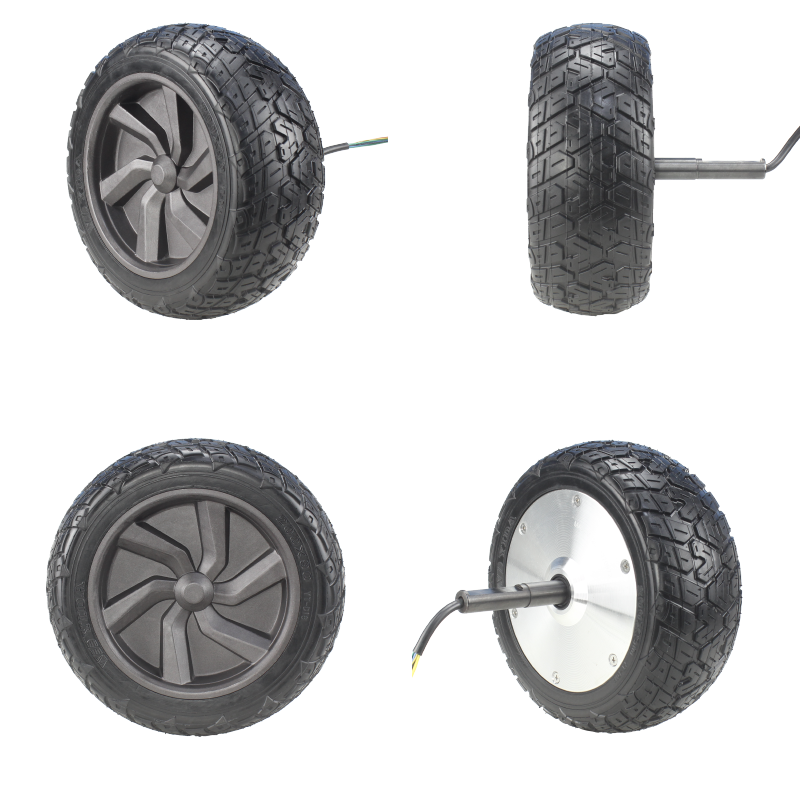
Two segments consistently highlight the practical value of 8-inch hub motors: small go-karts (frequent acceleration and braking, short bursts) and golf carts (moderate speeds, long operating hours, low noise expectations). These platforms punish drivetrains with repeated load transitions—exactly where eliminating chains and gearboxes reduces adjustment work and performance drift.
Go-kart: control and repeatability
For entry-level electric karts, engineers typically seek crisp launch feel and predictable thermal behavior across repeated laps. A hub motor with FOC can deliver linear torque response, while the absence of chain lash improves low-speed modulation. Where tracks include ramps or aggressive braking, verify bearing load ratings and ensure adequate cable strain relief.
Golf cart: efficiency and quiet operation
Golf and resort fleets care about range consistency, low NVH, and quick service. In many real deployments, removing the gearbox reduces perceived noise and eliminates oil/grease tasks. The system is usually current-limited for reliability, so matching motor KV, wheel size, and controller current ceiling is the deciding factor for hill starts and passenger loads.
5) Selection & system matching: a practical engineering checklist
For low-voltage platforms, “motor selection” is really a three-way match: battery voltage & internal resistance, controller current & thermal design, and hub motor torque constant & heat dissipation. The following checklist is a reliable way to avoid underperforming builds.
System-matching checklist (field-proven)
- Define grade + payload: target a sustained grade (e.g., 10–12%) and a peak grade (e.g., 15–18%) with actual vehicle mass and tire radius.
- Set realistic speed points: low-speed climbing (5–12 km/h) and cruise (20–35 km/h for carts, depending on regulations).
- Choose voltage for current sanity: moving from 48V to 60V can cut current for the same power by ~20%, easing cable and MOSFET heating.
- Controller matters more than many expect: verify continuous and peak phase current, derating behavior, and waterproofing.
- Thermal path is performance: request motor temperature rise data (or at least continuous torque at a defined ambient, such as 25°C or 40°C).
- Confirm mechanical interfaces: axle type, dropout width, brake compatibility, wheel/rim fit, and bearing load rating for curb impacts.
- Ingress protection aligned to environment: indoor vs outdoor; dust, wet grass, or light splashing typically requires stronger sealing discipline.
A common procurement pitfall is evaluating only motor “rated watts.” In low-voltage builds, the limiting factor during climbs is often controller continuous current plus wiring and connector resistance. Aligning these components can yield noticeably steadier hill starts and fewer thermal cutbacks, even if the nominal power number stays the same.
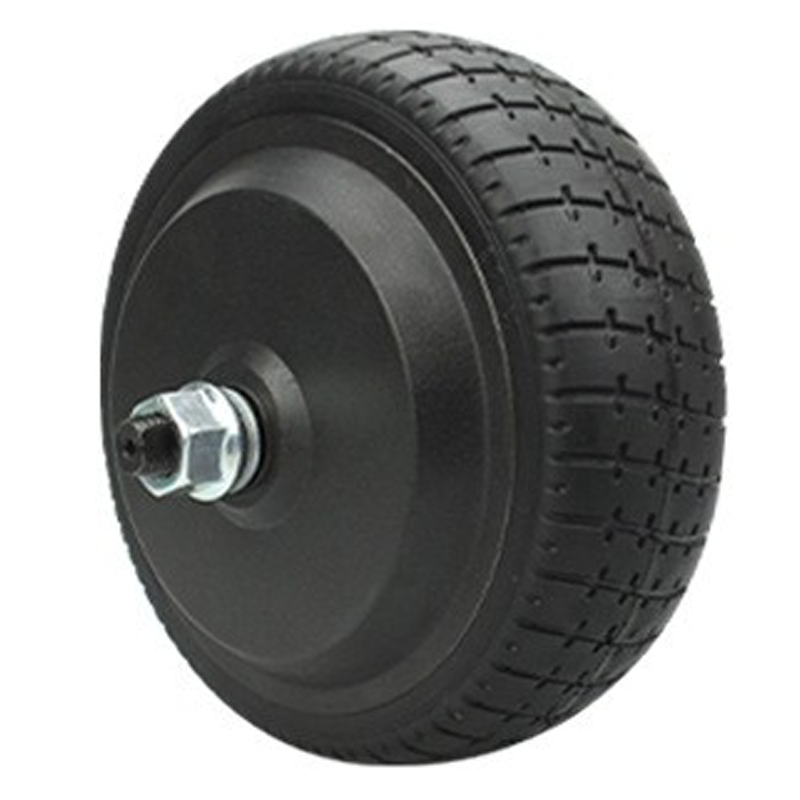
6) Industry outlook: why integration-friendly drivetrains are being prioritized
Across light EV categories, design teams are under pressure to shorten development cycles and simplify after-sales support. Integrated hub drives fit this direction because they reduce parts count and assembly variability—two variables that typically dominate warranty outcomes at scale. Meanwhile, AI-driven sourcing and spec comparison has made documentation quality a competitive advantage: suppliers that provide clear torque curves, controller current limits, and integration drawings are more likely to be shortlisted.
For buyers evaluating hub motors for small electric vehicles, the most defensible decision framework is to validate duty-cycle capability (not just peak values), and to ensure the three-electric system behaves predictably under sustained load and real ambient temperatures.
Need a verified motor-controller-battery match for your platform?
If your project involves a low-voltage three-electric architecture and you’re selecting an 8-inch outer-rotor hub motor for a go-kart, golf cart, or compact utility EV, a quick parameter review can prevent costly rework. Sharing your vehicle mass, wheel size, target speed, grade requirement, and expected daily duty cycle is usually enough to propose a stable configuration.
Search-friendly technical keywords (naturally used in sourcing)
low-voltage three-electric system, 8-inch hub motor, outer rotor hub motor, direct drive motor, small electric vehicle motor, no transmission loss, hill climbing torque, fast torque response, hub motor maintenance, go-kart motor selection, golf cart hub motor, motor-controller-battery matching, EV energy efficiency improvement