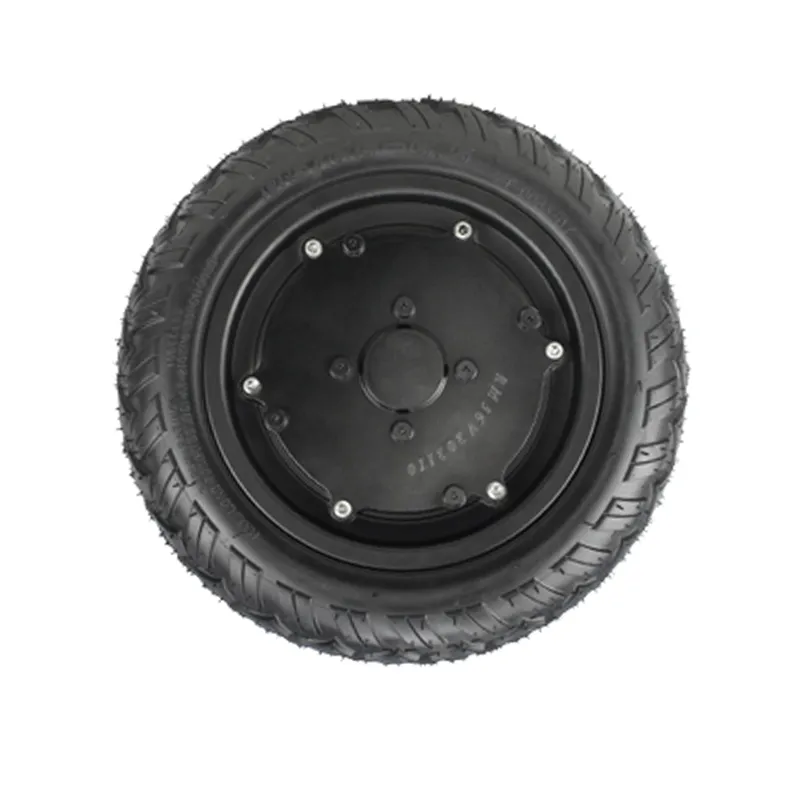
Maintenance & Fault Troubleshooting Guide for WINAMICS 8-Inch (200mm/84mm) Unilateral Shaft-Pressed Hub Motor
This guide from Shenzhen Jinhaixin Holdings Co., Ltd covers maintenance procedures and fault diagnosis for the WINAMICS 8-inch (200mm diameter, 84mm tire width) conventional unilateral shaft-pressed hub motor, including installation checks, wiring inspection, temperature monitoring, noise/vibration evaluation, and graded actions for common failures.
This document provides a practical maintenance and fault troubleshooting operating guide for the WINAMICS 8-inch conventional unilateral shaft-pressed hub motor (motor diameter 200mm, tire width 84mm) manufactured by Shenzhen Jinhaixin Holdings Co., Ltd.
It is intended for maintenance engineers, technical support teams, and end users of small vehicles and recreational equipment (e.g., small karting and leisure devices). The scope includes installation fixing checks, unilateral shaft-pressed connection verification, electrical wiring inspection, operating temperature monitoring, abnormal noise & vibration diagnosis, and mechanical/environment checks.
Product covered
- Brand: WINAMICS
- Motor type: Unilateral shaft-pressed hub motor (conventional model)
- Size: 8-inch, 200mm diameter
- Tire width: 84mm
- Typical fit: Small karting / leisure equipment
Safety & Operating Limits (Read Before Service)
- Use measurement tools within proper ranges: multimeter, clamp meter, temperature probe, and torque tools.
- Do not disassemble the motor during routine troubleshooting.
- Do not change controller parameters or modify the power supply configuration as part of fault finding.
- Stop operation and isolate power if you observe smoke, burning odor, repeated no-start events, or rapidly increasing noise/vibration.
Recommended Service Kit
- Multimeter (continuity/voltage)
- Clamp meter (operating current)
- Temperature probe / infrared thermometer
- Torque tools for mounting fasteners
- Basic hand tools for external inspection
- Cleaning cloth and non-corrosive cleaner
Tip: Always record measured voltage/current/temperature and the test conditions (load, duration, environment) for traceable diagnosis.
Preventive Maintenance Checklist
Preventive maintenance focuses on stability of the unilateral shaft-pressed structure, secure fixing, and healthy electrical connections. Perform checks after initial installation, after the first commissioning run, and periodically according to your duty cycle.
| Item |
What to check |
Method / tool |
Action if abnormal |
| Installation fixing |
Mounting fasteners secure, no loosening marks, proper alignment |
Visual check + torque tool |
Re-tighten to your equipment spec; re-check after a short run |
| Unilateral shaft-pressed connection |
No relative movement, no unusual wear or contact marks |
Visual check + gentle manual verification (power off) |
Stop use if shifting is observed; contact WINAMICS support |
| Wiring & loom |
No cuts, pinch points, rubbing, loose connectors, corrosion |
Visual + continuity checks with multimeter |
Repair/replace wiring as per your harness standard; secure routing |
| Operating temperature |
Trend of temperature rise under similar load |
Temperature probe / IR thermometer |
Reduce load; check wiring/current; stop and escalate if persistent |
| Noise & vibration |
New or increasing noise, periodic rubbing, abnormal vibration |
Listen/feel; compare left/right; check mounting & fit |
Stop if severe; inspect mechanical fit & environment; contact support |
Step-by-Step Troubleshooting Flow (Graded Actions)
- Safety isolation: Power off, disconnect supply as applicable, wait for discharge per your system practice.
- Visual inspection: Check motor exterior, mounting, unilateral shaft-pressed area, cable routing, connector seating.
- Electrical connection inspection: Verify continuity where appropriate; check for loose terminals, damaged insulation, or corrosion.
- Commissioning re-test: Run at low load first; observe start behavior, noise/vibration, and current trend.
- Temperature monitoring: Track temperature rise; compare against your baseline under similar conditions.
- Escalation decision: If symptoms persist or worsen, stop operation and contact Shenzhen Jinhaixin Holdings Co., Ltd (WINAMICS) for technical support.
Note: This guide focuses on
installation checks,
wiring inspection,
temperature monitoring, and
noise/vibration evaluation. Avoid parameter changes or internal disassembly during routine troubleshooting to prevent secondary failures.
Common Symptoms & Practical Checks
1) Overheating
- Confirm airflow/heat dissipation around the motor and that no debris blocks ventilation paths in the equipment design.
- Check for abnormal current increase using a clamp meter under the same load profile.
- Inspect wiring/loom for high-resistance points (loose connectors, oxidation, partial breaks).
- If temperature continues rising rapidly, stop operation and escalate to WINAMICS support.
2) Abnormal current
- Verify all external electrical connections are properly seated and not heating at the connector points.
- Check cable routing for pinch points or insulation damage that may cause intermittent faults.
- Compare measured current trends with your normal baseline for the same vehicle/equipment configuration.
- Do not adjust controller parameters as a first response; prioritize connection and mechanical fit checks.
3) Increasing noise or vibration
- Inspect mounting fasteners for loosening and re-check the mechanical fit around the unilateral shaft-pressed interface.
- Look for external rubbing points, misalignment, or environment-driven contamination (sand/dust ingress) affecting rotating parts in the equipment.
- Perform a controlled low-speed test and listen for periodic patterns (often indicating fit or contact issues).
- If vibration becomes strong or suddenly worsens, stop use and arrange inspection.
4) Insufficient power
- Check for mechanical drag in the equipment (alignment, external contact) and confirm the wheel/tire assembly rotates freely when safe to do so.
- Inspect wiring and connectors for looseness and signs of heating (discoloration/odor).
- Confirm that installation is correct for the 200mm diameter / 84mm tire width configuration and that no secondary modifications introduced fit issues.
5) No start
- Start with an external check: connectors fully inserted, no bent pins, and harness integrity verified.
- Use a multimeter for basic continuity checks on accessible external lines (according to your system design).
- Inspect for physical interference or locking caused by mounting misalignment or foreign objects.
- If the motor repeatedly fails to start after external checks, stop and contact Shenzhen Jinhaixin Holdings Co., Ltd for support guidance.
Installation Quality Checks (Focused on Unilateral Shaft-Pressed Design)
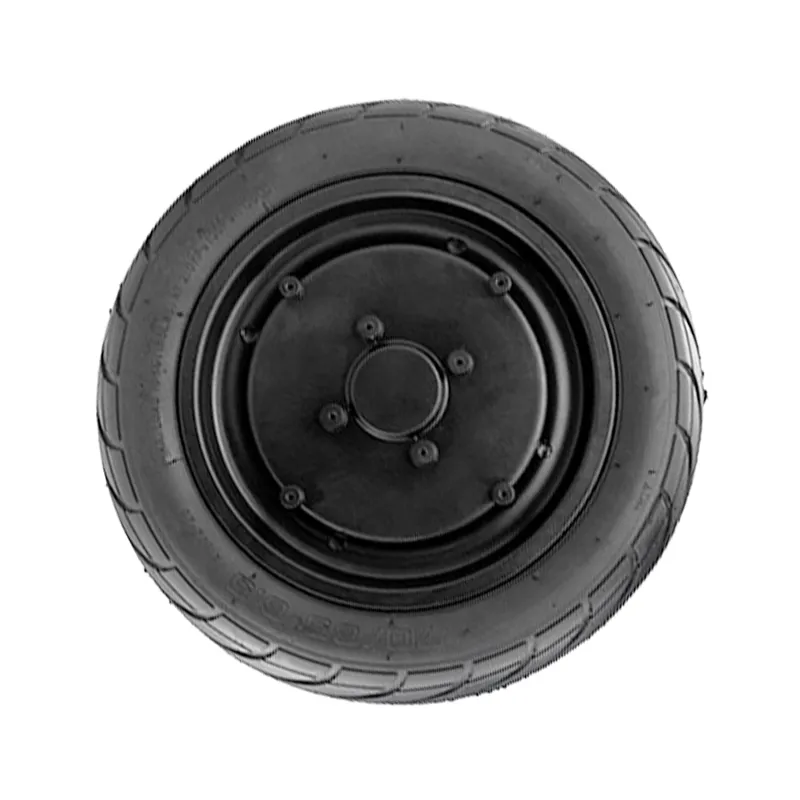
The unilateral shaft-pressed structure is designed to enhance stability and support efficient power transmission. To preserve these benefits, ensure the installation is secure and free of misalignment that could lead to noise, vibration, or premature wear.
- Confirm the motor is fixed firmly to the equipment structure; avoid uneven stress caused by skewed mounting surfaces.
- Re-check fastening after the first short test run; loosening early in commissioning is a common root cause of vibration.
- Keep the motor exterior clean; remove debris that may affect heat dissipation and visual inspections.
When to Stop and Escalate
- Rapid temperature increase or repeated overheating after wiring and environment checks.
- Abnormal current that persists under controlled low-load testing.
- Sudden strong vibration, grinding noise, or any sign of mechanical interference.
- Repeated no-start events after external connection and fixing checks.
Prepare your troubleshooting record (symptom, conditions, photos, measured current/temperature) to speed up remote support.
About WINAMICS & Shenzhen Jinhaixin
Shenzhen Jinhaixin Holdings Co., Ltd is an integrated B2B manufacturer focused on low-voltage e-powertrain systems, providing hub motors, drive controllers, and energy battery packs with quality management and efficient operations. For the WINAMICS 8-inch conventional unilateral shaft-pressed hub motor, we support customers with product integration guidance and after-sales service aligned with safe operating boundaries.
Service Reminder
For stable operation of the WINAMICS 8-inch (200mm/84mm) unilateral shaft-pressed hub motor, prioritize correct fixing, clean and secure wiring, and consistent temperature/noise monitoring. If you need assistance with compatibility, installation verification, or persistent faults, contact the technical team at Shenzhen Jinhaixin Holdings Co., Ltd.

.png?x-oss-process=image/resize,h_800,m_lfit/format,webp)